Material Comparison in Infrastructure Projects: GRP or HDPE?
Infrastructure systems are massive engineering structures designed to operate silently and uninterruptedly underground for decades. The success of wastewater, potable water, or agricultural irrigation projects largely depends on the accuracy of the selected pipe material. The choice between GRP and HDPE pipes, one of the most frequent dilemmas faced by project managers, requires evaluation across a wide spectrum ranging from topography to hydraulic expectations. Both materials possess unique strengths; the true engineering achievement here lies in accurately matching the material's capabilities with the specific challenges of the project.
1. Hydraulic Flow and Smoothness Coefficients in Large-Diameter Lines
The most fundamental element determining the energy efficiency of a pipeline is its inner surface roughness. Both High-Density Polyethylene (HDPE) and Glass-Reinforced Plastic (GRP) pipes feature superior smoothness coefficients compared to traditional concrete or steel pipes.
This low roughness minimizes friction losses, providing significant energy savings in pumping systems. However, as diameters increase in large-scale main transmission lines, the increase in pipe wall thickness can lead to variations in the hydraulic cross-sectional area.
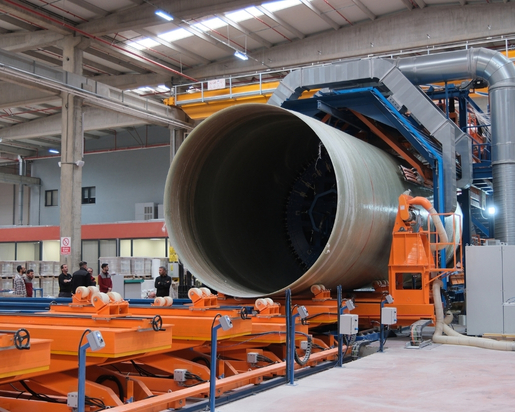
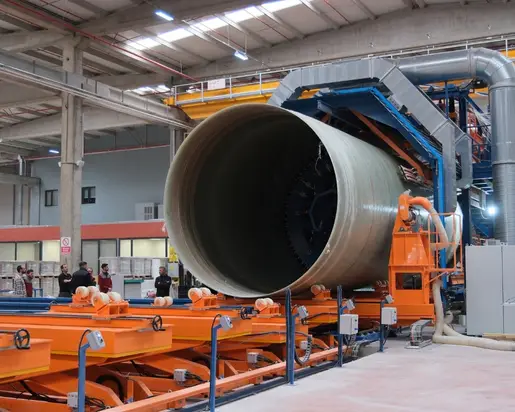
Because GRP pipes can meet high-pressure classes with thinner wall thicknesses due to their composite structure, they can offer a wider inner diameter and consequently a higher flow capacity compared to HDPE pipes of the same outer diameter.
HDPE, on the other hand, provides a jointless and smooth flow throughout the line thanks to its welded joining technology, eliminating the risk of turbulence especially in undulating terrain profiles.
2. Installation Speed, Logistics Convenience, and Total Investment Cost Analysis
In large-scale infrastructure investments, transportation, on-site handling, and installation expenses alongside material costs determine the total investment amount.
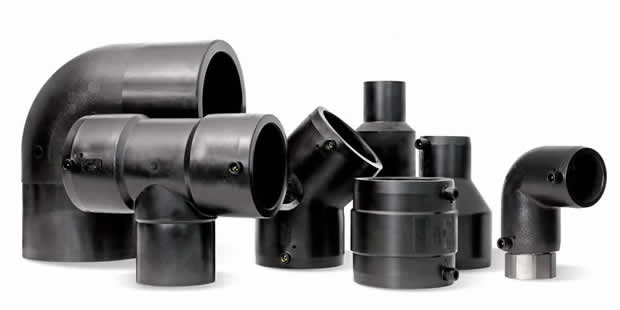
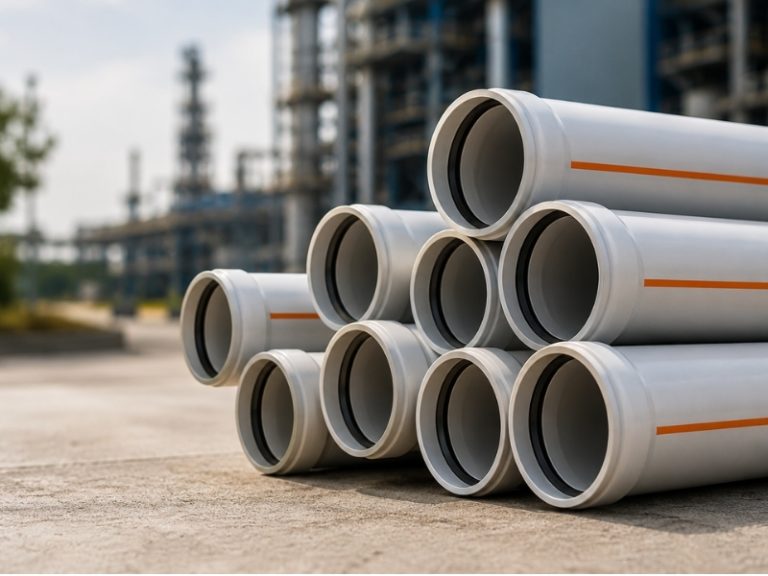
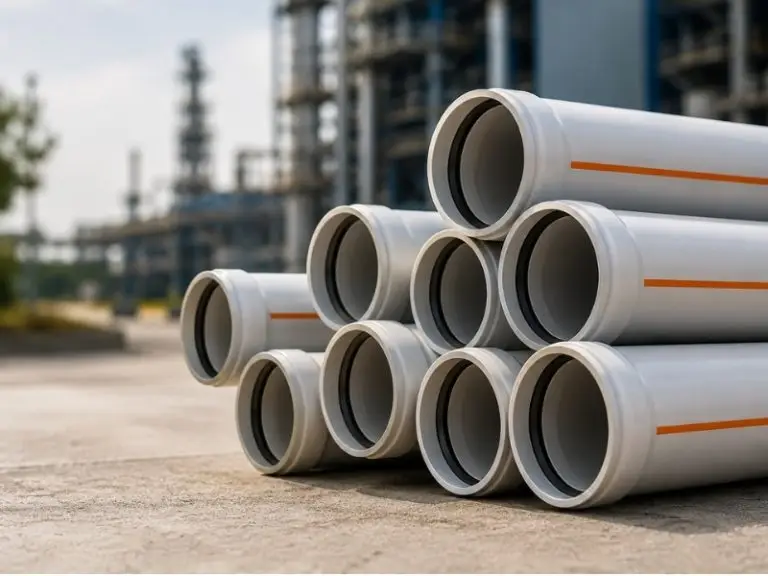
HDPE Pipes: Thanks to their flexible structure and impact resistance, they exhibit less fragility under site conditions. Joined via butt fusion or electrofusion methods, HDPE pipes can be bent and routed along the line especially in challenging topographies, which reduces the need for fittings (elbows).
However, as diameters increase—for instance, at 1000 mm and above—the weight of HDPE pipes rises, which increases transportation costs and creates requirements for specialized and heavy equipment for welding operations on-site.
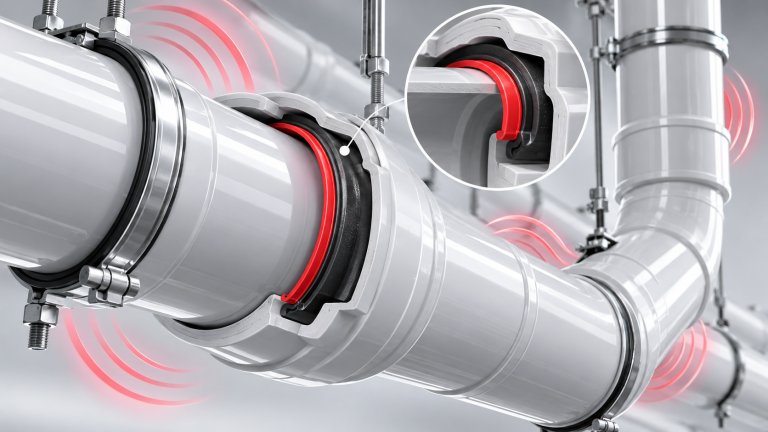
GRP Pipes: They are considerably lighter compared to HDPE. Their lightweight structure allows a greater meterage of pipes to be transported with standard transport vehicles. Since they are generally joined via sleeve (socket and gasket) push-fit systems, the installation speed is much higher than HDPE welding and is less affected by weather conditions (rain, cold).
However, the bedding and backfill operations (soil compaction) of GRP pipes are subject to much more stringent engineering rules compared to HDPE; incorrect backfill workmanship can cause the pipe to undergo elliptical deformation.
3. Chemical Corrosion and Strength Balance under Different Soil Conditions
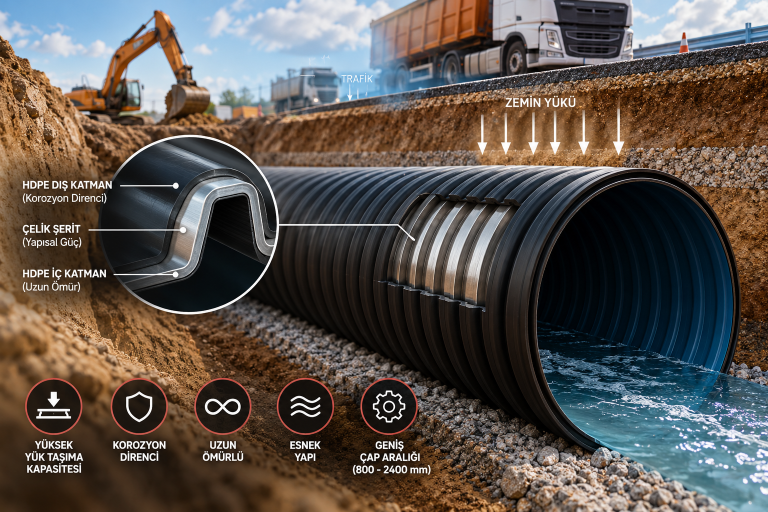
In underground systems, pipes contend not only with internal pressure but also with external soil loads, traffic loads, and the chemical effects of groundwater. Regarding corrosion resistance, both HDPE and GRP pipes exhibit flawless performance compared to metal systems, eliminating rusting and rotting issues.
Their responses to different soil conditions vary inherently due to the nature of the material. HDPE pipes can tolerate underground movements, settlements, and ground subsidence thanks to their viscoelastic structures. Their flexible structure increases crack resistance against impacts.
GRP pipes, on the other hand, possess high "ring stiffness" values. Glass fiber reinforcement grants the pipe a high structural rigidity, but this makes it more sensitive than HDPE to sudden point impacts and rock protrusions. Therefore, careful selection of the excavation base and backfill material is mandatory in GRP lines.
FAQ (Frequently Asked Questions)
What is the fundamental difference in tensile strength between GRP and HDPE pipes?
GRP pipes exhibit a very rigid and durable structure in terms of rupture and tensile strength thanks to the glass fiber reinforcement they contain. HDPE pipes, on the other hand, possess a ductile (flexible) structure and tend to elongate rather than break when exposed to high tensile forces. This flexibility gives HDPE an advantage against ground movements.
Which one should be preferred in high-pressure transmission lines?
Both materials can be manufactured in high-pressure classes of PN16, PN25, and above. While HDPE is frequently preferred for small and medium-diameter high-pressure lines for sealing reliability and flexibility, GRP pipes stand out hydraulically and economically in very large-diameter aqueduct lines, offering the same pressure resistance with a thinner wall thickness and providing an inner diameter advantage.
Is HDPE or GRP safer for projects in earthquake zones?
HDPE pipes are unquestionably safer in regions where active fault lines pass or seismic activity is high. Their molecular flexibility and the ability of welded joints (compared to rigid gasketed push-fits) to move with tremors prevent the pipeline from rupturing and shattering during an earthquake.
How do Kuzeyboru engineers perform project-specific material analysis?
The Kuzeyboru engineering department comprehensively examines the topographic structure of projects, soil survey reports, characteristics of the fluid to be conveyed, static/dynamic loads the system will be exposed to, and regional seismic data.
Furthermore, by calculating the total cost of ownership (lifecycle) for both materials, the pipe system best suited not only for the project's current installation budget but also for its 50-year trouble-free operation vision is determined.