What are the differences between PVC-U pipes and PPR pipes?
What Are the Differences Between PVC-U Pipes and PPR Pipes?
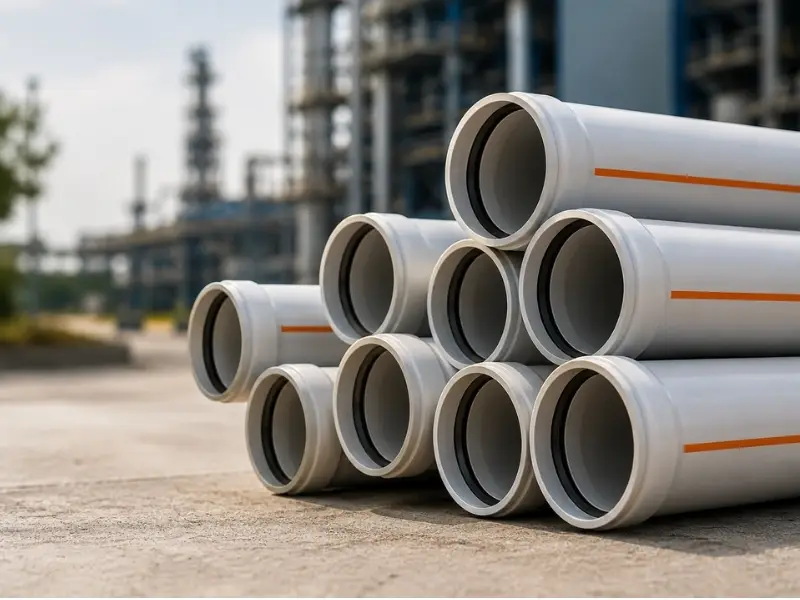
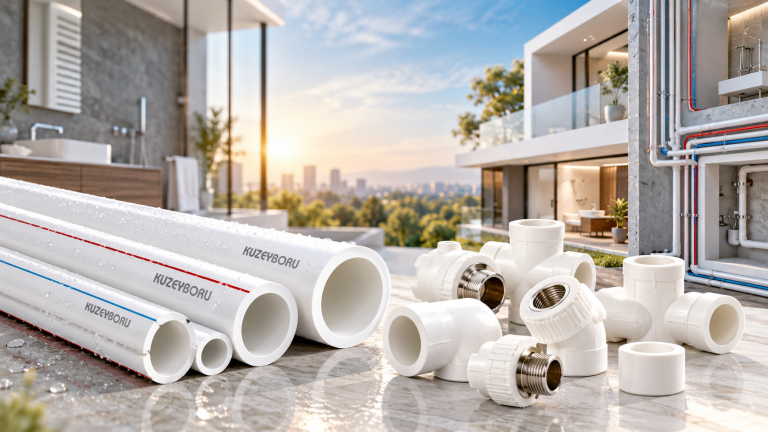
In modern superstructure projects, fluid transfer necessitates the selection of polymeric materials that comply with the thermodynamic and mechanical requirements of the system. Today, PVC-U (Unplasticized Polyvinyl Chloride) and PPR (Polypropylene Random Copolymer), the two most common thermoplastic materials encountered in installation engineering, offer distinct performance profiles due to their structural properties.
Manufacturing Material Differences of PVC-U and PPR Pipes
The fundamental difference between the two pipe types stems from the chemical structure and morphology of the polymer chains. PVC-U (Unplasticized Polyvinyl Chloride) is an amorphous thermoplastic. The chlorine (Cl) atom in its structure creates strong dipole-dipole interactions between the polymer chains, imparting high rigidity (hardness) to the material. Since it contains no plasticizers, it possesses a high tensile strength (E modulus ≈ 3000 MPa). On the other hand, PPR (Polypropylene Random Copolymer - Type 3) is a semi-crystalline copolymer synthesized by randomly adding ethylene monomers to the polypropylene chain. This structure optimizes the crystallinity ratio of the material, increasing its impact absorption capacity and improving its thermal stability. The elasticity modulus of PPR is lower compared to PVC-U (≈ 800-900 MPa), which grants it the ability to tolerate thermal expansions within the system.
The Right Choice in Hot-Cold Water and Wastewater Installations
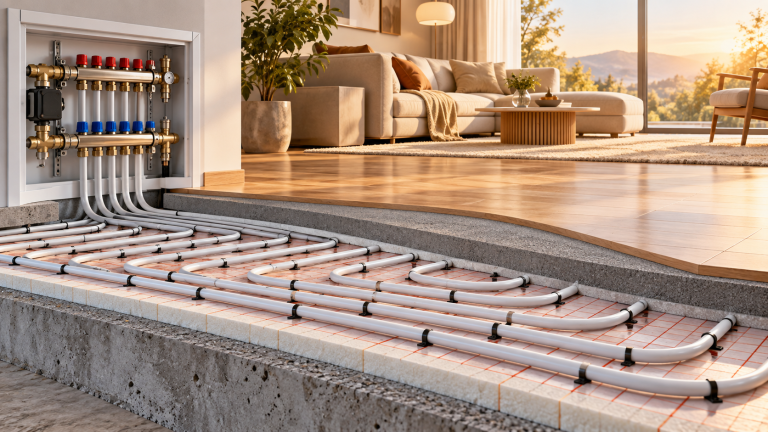
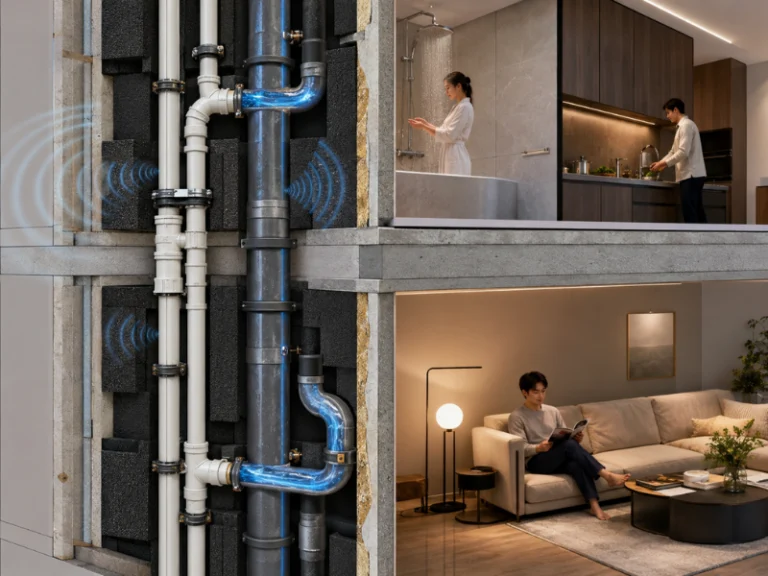
The selection of pipe material must be evaluated not only based on the fluid type, but also according to the operating temperature, pressure class, chemical exposure, installation method, and expected service life. PVC-U systems provide a rigidity advantage in cold water and wastewater lines operating in low and medium temperature ranges. Conversely, PPR systems offer a more suitable performance profile against thermal stresses in hot water and heating lines. Therefore, the core approach in engineering design, rather than accepting that "a single material is suitable for every application", is to select the optimum material according to the system conditions.
Pressure and Temperature Resistance Comparison
Thanks to the high rigidity in its molecular structure, PVC-U pipes offer excellent hydrostatic pressure resistance at room temperature (20°C). In cold water lines, they can withstand much higher internal pressure values without undergoing deformation compared to PPR pipes with the same wall thickness. However, when the fluid temperature in the system starts to rise to 40°C and above, a characteristic decline trend begins in the mechanical resistance curve of the PVC-U material. In contrast, PPR pipes exhibit a much more stable performance against increasing temperatures due to their special copolymer structure. They show superior resistance against permanent deformations (creep behavior) that may occur over time under high temperature and continuous pressure. Under increasing thermal loads, the internal pressure resistance of the material draws a more predictable graph.
Cost and Longevity Analysis
In terms of initial investment cost, PVC-U pipes offer an economic solution in most cold water and wastewater applications. Being lightweight can provide a labor advantage during transportation and installation processes. Although the initial cost of PPR pipes may seem higher in some applications, the welded joint method, corrosion resistance, and long service life in hot water installations can positively impact the total cost of ownership. Therefore, cost analysis should be evaluated not only over the unit meter price, but also together with installation time, connection reliability, maintenance needs, energy losses, and expected service life. The service life of both materials is projected as a minimum of 50 years through accelerated aging tests based on the Arrhenius equation.
World Standards in Modern Production Facilities
Manufacturing to international quality norms requires flawless management of the rheological behavior of the polymer. In thermoplastic pipe production, extremely precise control of extruder die temperatures and the melt flow index (MFI) in the extrusion line is essential to achieve high-quality surface smoothness and homogeneous wall thickness. The TS EN ISO 1452 standards are taken as reference for PVC-U pipes, while TS EN ISO 15874 and DIN 8077/8078 standards are used for PPR pipes. These standards strictly bind the hydrostatic pressure tests, oxidation induction times (OIT), and dimensional tolerances of the pipes.
Our Professional Engineering Solutions
As Kuzeyboru, with our deep-rooted experience in the sector and strong R&D infrastructure, we design high-tech pipe systems that will respond to the most challenging conditions of superstructure projects. We do not just manufacture our products; we continuously push the performance limits of our PVC-U and PPR systems upward with our polymeric material improvement processes.