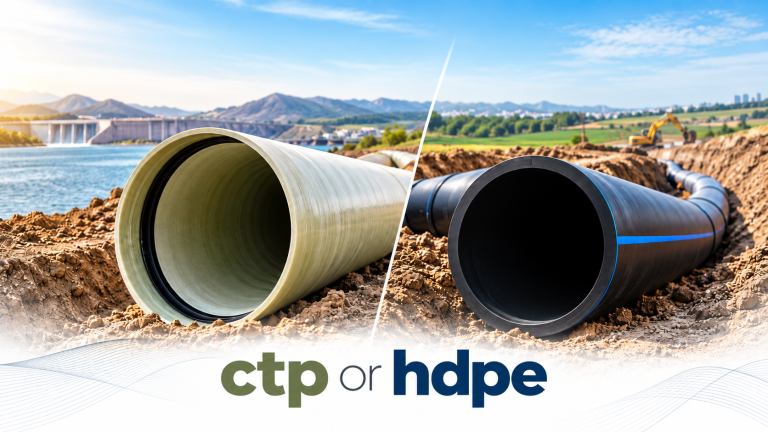
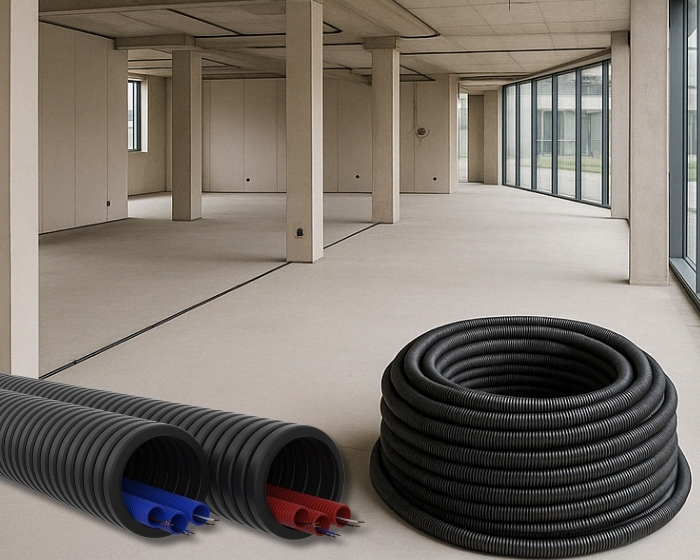
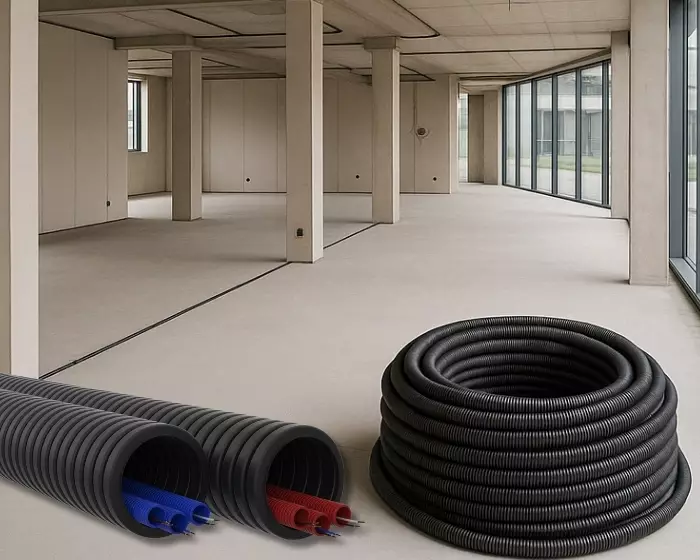
The success of underground drainage, sewage, and stormwater management systems in infrastructure projects depends on the accurate analysis of soil-pipe interaction. In this context, double-walled corrugated pipes produced from High-Density Polyethylene (HDPE) raw material provide superior ring stiffness thanks to their ribbed outer surface, while offering maximum hydraulic flow with their smooth inner wall. Corrugated pipe sizes, produced in a wide range from DN 100 mm to massive DN 2400 mm according to the requirements of the project, directly affect the performance of the system.
Pipe Diameter Selection Criteria According to Projects
Diameter selection in corrugated pipe systems requires simultaneous optimization of hydraulic and geotechnical parameters beyond empirical estimations. The primary criterion in the selection process is the peak flow rate that the system must convey. However, correct engineering design is not limited to flow rate alone; other critical factors directly affecting the selection of diameter and stiffness class (SN4, SN8, SN16) include: Bedding Conditions: The quality of backing and bedding at the points where the pipe contacts the soil. Trench Depth and Groundwater Level: The soil load on the pipe and the hydrostatic lifting force. Dynamic Traffic Loads: Moving weights on the soil surface (H20 or HS20 standards, etc.). These parameters vary according to the project type. For instance, in highway culvert crossings where surface runoff is fast and high discharge capacity is required, larger diameter (DN 1000 and above) pipes with high SN values are designed. In contrast, smaller diameters (DN 200 - DN 400) are preferred in capillary urban drainage lines.
Socketed Corrugated Pipe Options Between 100 mm and 1000 mm
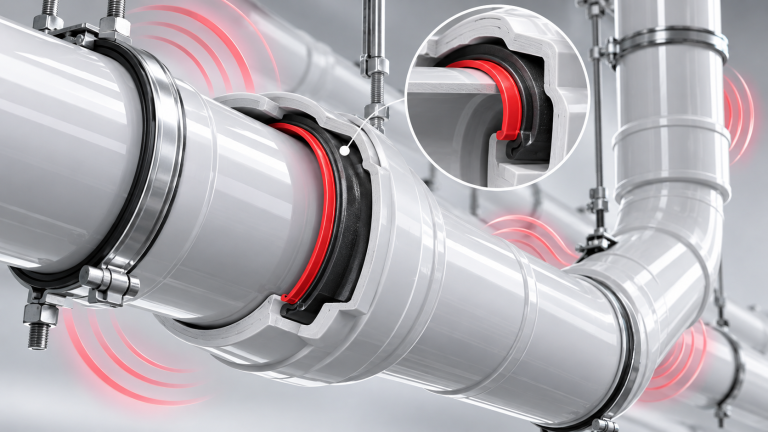
Forming the backbone of urban infrastructure networks, corrugated pipes between DN 100 and DN 1000 mm are generally produced with an integrated "socketed" structure on the extrusion production line. This monolithic design eliminates the need for extra couplings on-site, maximizing installation speed and significantly reducing labor costs. Sealing, which is a critical factor in socketed joint systems, is provided by EPDM (Ethylene Propylene Diene Monomer) elastomeric gaskets complying with the DIN EN 681 standard. The viscoelastic compression mechanism of the gasket allows a margin of flexibility against underground seismic movements and potential ground settlements. In this way, the pipeline is guaranteed to remain watertight, eliminating the risks of exfiltration into groundwater or external water infiltration into the line. Socketed pipes in this diameter range offer optimum hydraulic performance, especially in wastewater collection lines of local governments and domestic discharge systems of industrial facilities.
Steel Reinforced Pipes for Large Infrastructures
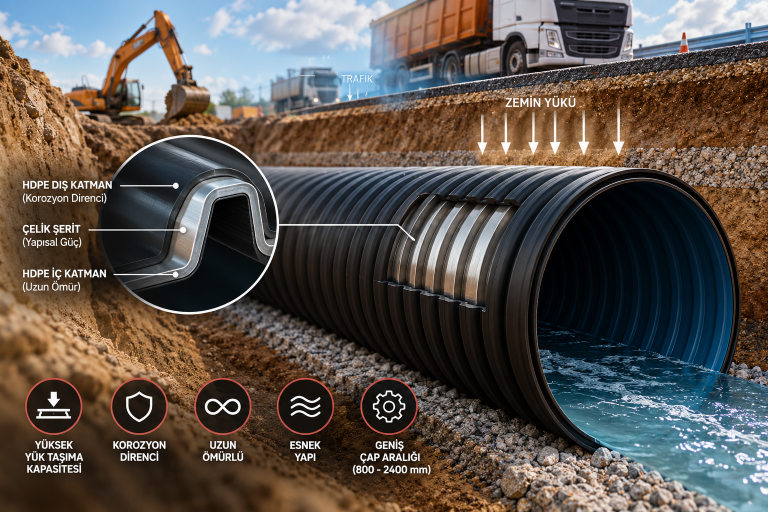
When diameters exceed DN 1000 mm (between DN 1200 - DN 2400 mm), the increasing trench width and soil backfill weight can limit the load-bearing capacity of standard thermoplastic structures. This engineering obstacle is overcome with Steel Reinforced Corrugated Pipe (SRCP) technology.
This hybrid system combines the exceptionally high modulus of elasticity of steel with the superior chemical corrosion resistance of polyethylene into a single composite matrix. High-strength steel profiles (ribs) integrated into the outer ribs of the pipe during the extrusion phase significantly increase the ring stiffness of the material.
Thanks to this advanced technology, stiffness classes such as SN8, SN10, or SN16 are achieved even in a massive diameter like DN 2400 mm, while keeping wall thickness and unit weight at a minimum. With all these advantages, SRCP systems are an indispensable engineering solution, especially for deep sea discharges, large-scale flood protection systems, and hydroelectric power plant transmission lines.
Hydraulic Capacity and Flow Calculation
Corrugated pipelines generally do not operate as pressurized systems; instead, they work on the principle of free-surface (gravity) flow. For this reason, the hydraulic capacity of the system is calculated using the Manning Equation, which necessitates the optimization of the pipe internal diameter.
Kuzey Boru: Export to 5 Continents and 105 Countries
Although the engineering calculations of infrastructure projects begin in a laboratory environment, the real quality of the system is proven on the global stage. Kuzey Boru combines its wide production capacity, stretching from DN 100 mm to DN 2400 mm steel-reinforced systems, with strict quality control protocols in international standards (ISO, EN, DIN).
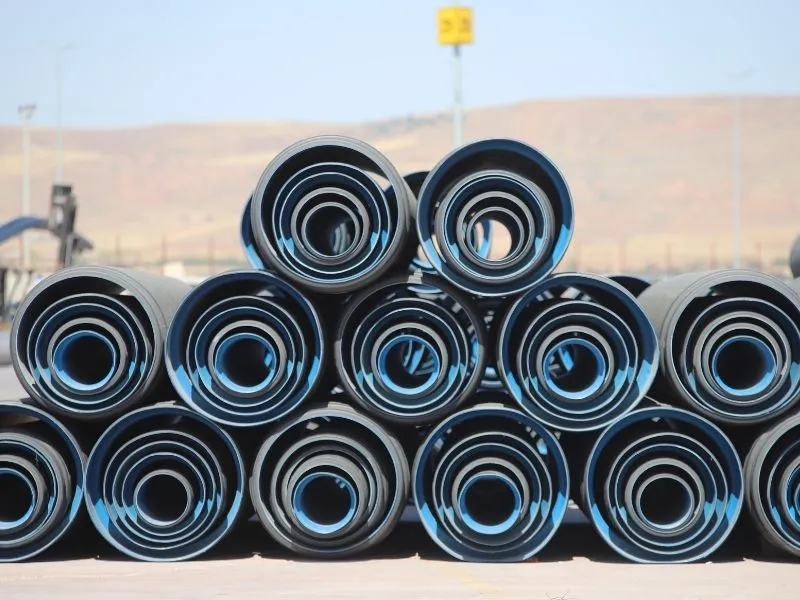
Especially thanks to advanced logistics optimization techniques, such as nesting pipes of different diameters inside each other for loading, the investment costs of international shipments are minimized. Corrugated pipes laid underground in 105 different countries across 5 continents under the assurance of Kuzey Boru maintain their structural integrity and watertightness in all kinds of aggressive geographical conditions, from extreme hot desert climates to freezing colds, adding value to global infrastructure networks.