R&D and Sustainability: Carbon Footprint and Green Technology
Modern industrial production paradigms are evolving toward circular systems where environmental impacts are minimized and resource efficiency is maximized. The production of high-performance infrastructure solutions must be carried out simultaneously with the preservation of ecological balance. In this context, research and development activities are the main driving force in the adaptation of green technologies to plastic pipe manufacturing processes.
Innovation Processes at Kuzeyboru R&D Center
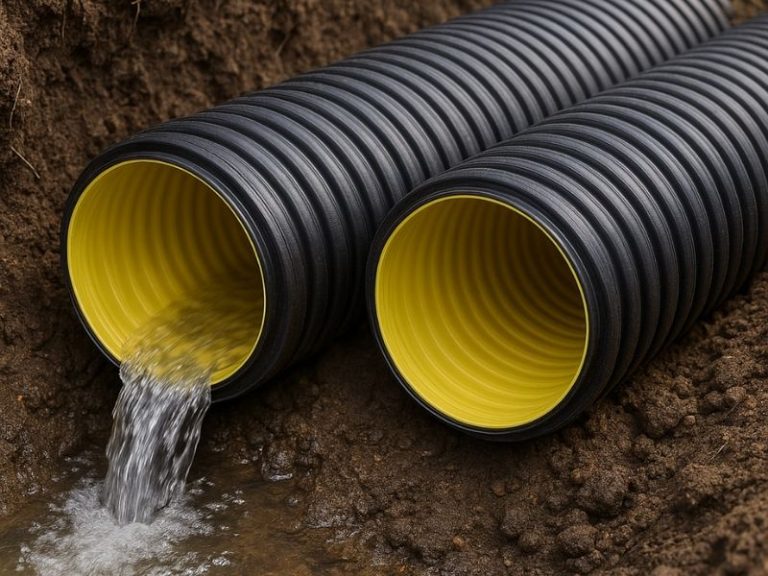
Innovation in plastic pipe production is shaped by analytical and experimental methods that push the boundaries of materials science. Within the Kuzeyboru R&D Center, environmental and mechanical optimization of production processes is achieved, particularly through large-scale TÜBİTAK 1832 program-supported projects. To increase the structural integrity of pipe systems and maximize material efficiency, Finite Element Method (FEM)-based modeling is actively utilized through advanced engineering software such as Simcenter. In products with complex geometries such as corrugated pipes, optimizing material distribution through these specific FEM analyses provides higher mechanical strength with less raw material, making a direct and measurable contribution to sustainability. In addition, the thermal behaviors and degradation profiles of polymers such as polypropylene (PP) and polyethylene (PE) are among the core research topics of our R&D center. Polymer degradation, a critical parameter of the product life cycle (LCA), is controlled by examining it with scientific foundations such as the Arrhenius kinetic model, thereby extending the useful life of pipes used in infrastructure projects and reducing long-term carbon emissions.
Sustainable Production Model in the Plastics Industry
The sustainable production model refers to the transition from the traditional "take-make-dispose" linear economy to circular economy principles. In the plastics industry, this model encompasses reintroducing production scrap into the system through regranulation processes, optimizing water usage with closed-circuit cooling systems, and minimizing the environmental costs of all logistics processes from raw material supply to the shipment of the final product.
Why Is Carbon Footprint Tracking Strategic?
The calculation and regular monitoring of the corporate carbon footprint in industrial facilities is not only an indicator of compliance with international regulations (e.g., the European Green Deal - Carbon Border Adjustment Mechanism - CBAM) but also of operational efficiency. Quantitatively measuring Scope 1 (Direct), Scope 2 (Indirect - Energy), and Scope 3 (Value Chain) emissions according to the Greenhouse Gas (GHG) Protocol is a strategic necessity. The total equivalent carbon dioxide emissions of a manufacturing facility are calculated using a holistic approach by multiplying activity data representing the facility's energy and raw material consumption, specific emission factors related to the relevant processes, and the global warming potentials of the released greenhouse gases. Periodic tracking of the carbon footprint enables the identification of energy-intensive areas in production processes and ensures that targeted emission reduction strategies are based on scientific foundations.
Contribution of Renewable Energy Use to Production
The extrusion line, which is the heart of plastic pipe production, has a high energy intensity due to plasticization processes. The goal in sustainable production is to minimize Specific Energy Consumption (SEC), which refers to the energy expended per unit mass of processed polymer. In Kuzeyboru facilities, the use of renewable energy sources such as Solar Power Plants (SPP) ensures that the total energy required by the production processes is met from zero-emission sources instead of fossil fuels. This situation dramatically reduces Scope 2 emissions, protects production unit costs (OPEX) against volatile energy markets, and increases the company's competitiveness.
Biodiversity Conservation and Stakeholder Awareness
The impact of macro-scale industrial activities on local ecosystems is one of the core focuses of corporate sustainability policies. Systematic rainwater harvesting practices are implemented in Kuzeyboru facilities to conserve natural resources and reduce the water footprint. The collected rainwater is utilized as process water in production lines. Additionally, all stakeholders in the supply chain (raw material suppliers, logistics partners, and end users) are raised to awareness regarding environmental standards.
Transparent Corporate Value Creation for Investors (KBORU)
Global financial markets evaluate not only the financial performances of companies but also their Environmental, Social, and Corporate Governance (ESG) scores as a fundamental investment criterion. Meeting carbon footprint targets, renewable energy investments, and transparent sustainability reporting reflect the corporate resilience of our company, which is traded on Borsa İstanbul under the ticker KBORU. The sustainability-focused TÜBİTAK projects of the Kuzeyboru R&D Center and its investments in green technologies and advanced materials science minimize legal sanction risks while meeting the increasing global demand for sustainable products, continuing to create measurable, transparent, and permanent corporate value for our shareholders.