Quality Control Processes in Pipe Systems: Durability and Service Life Tests Conducted in Accredited Testing Laboratories
The ability of a pipeline to remain in service for 50 years—or even longer—begins with the tests conducted before it is delivered to the project site. Pipe durability and service life tests carried out at the Kuzeyboru Accredited Testing Laboratory in accordance with national and international standards provide measurable proof of the reliability offered by every product. In modern infrastructure projects, success depends not only on accurate engineering calculations but also on the ability of the materials used to withstand challenging field conditions. In large-scale networks, complex pipeline designs, and high-pressure systems, operating with zero tolerance for error is essential. At this point, pipe quality control processes become more than a requirement; they are the most critical step in ensuring project sustainability, hydraulic performance, and structural integrity.
Pipe Quality Control Processes in Accredited Laboratories
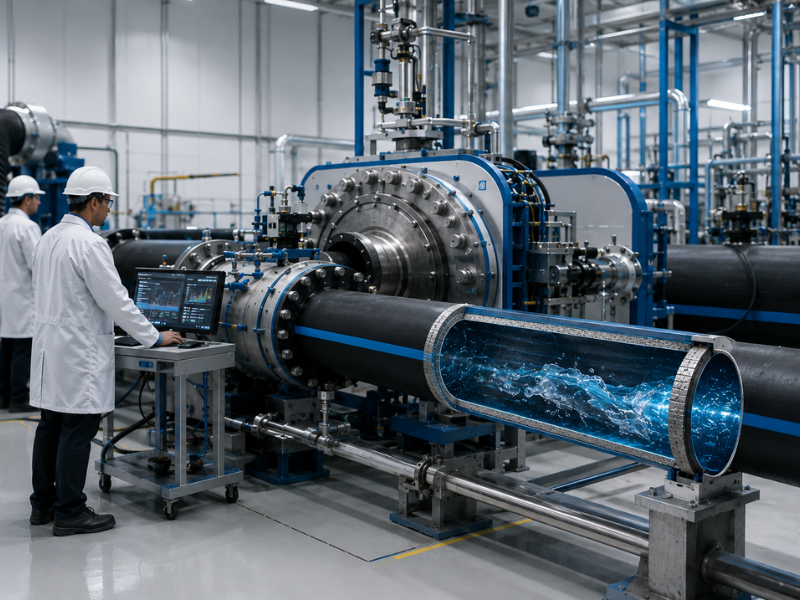
Pipe quality control is not a simple visual inspection; it is an integrated process based on measurable stages, extending from the arrival of raw materials at the facility to the shipment of finished products. At every stage, the geometric, mechanical, physical, and chemical properties of the product are verified according to defined specifications. An accredited testing laboratory serves as the center of detailed R&D and validation processes, revealing not only the current condition of manufactured pipes but also their long-term fatigue resistance and aging performance. The difference between an ordinary testing process and a scientific, measurable, and repeatable analysis lies in the competence of the laboratory. Our accredited testing laboratory has been audited and approved by TÜRKAK, Türkiye’s authorized independent accreditation body, in accordance with the TS EN ISO/IEC 17025 standard. Pipe quality control processes in accredited laboratories are carried out using methods approved by independent authorities and calibrated high-technology equipment.
Accreditation provides assurance regarding equipment calibration, personnel competence, traceability of test methods, and the reliability of test results. In other words, a test report issued by an accredited laboratory represents a result verified not only by the manufacturer but also by an independent technical authority. For Kuzeyboru, quality control is not an inspection performed at the end of production; it is an integral part of manufacturing excellence. All test results are digitally recorded through software developed in-house, ensuring that quality is maintained not through subjective observation but through a fully traceable system.
The Critical Role of Quality Control in Infrastructure Pipes
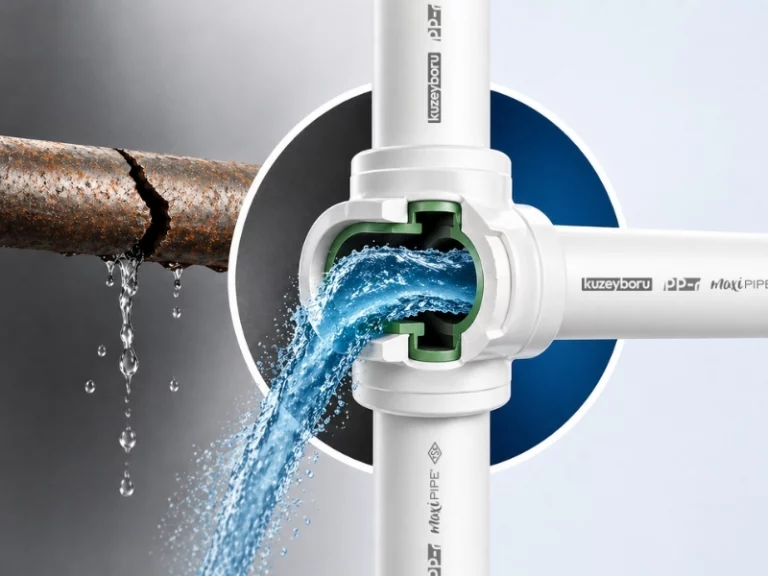
Once a drinking water, wastewater, or natural gas pipeline is installed, it remains buried beneath meters of soil, asphalt, or concrete structures. Replacing these pipes due to even a minor failure is both technically challenging and economically costly. Therefore, quality in infrastructure pipes is not a characteristic that can be corrected during operation; it is an engineering requirement that must be assured from the very beginning.
Throughout their service life, infrastructure pipes are exposed simultaneously to multiple loads, including internal pressure, external loads, temperature effects, and time-dependent degradation. The quality control process is carried out to simulate these demanding field conditions through accelerated laboratory testing and to ensure a defect-free product range. Since the failure of a single pipe can jeopardize the integrity of the entire system, quality control procedures in infrastructure projects are directly linked to safety, asset protection, and long-term durability.
Operating Standards of Our Accredited Testing Laboratory
At Kuzeyboru, we support our engineering excellence in manufacturing with the uncompromising standards of our testing laboratories. The operating standards of our Accredited Testing Laboratory are based on the latest technological infrastructure and internationally recognized methodologies. We work in full compliance with global standards such as ISO, EN, DIN, and TSE. Pipe strength and service life tests conducted at the Kuzeyboru Accredited Testing Laboratory in accordance with national and international standards enable us to deliver products that meet not only today’s infrastructure requirements but also the demands of the future with confidence and reliability.
Hydrostatic Pressure and Leak Tightness Tests
The primary function of a pipeline is to transport fluids safely and without loss. Hydrostatic Pressure and Leak Tightness Tests play a crucial role in verifying this performance.
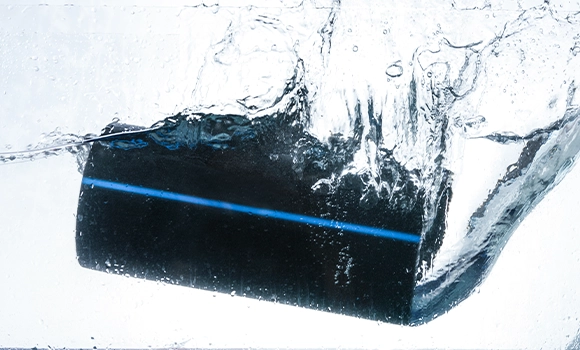
Hydrostatic Pressure Tests: Measure how long pipes can withstand stress levels significantly higher than their operating pressure at specified temperatures (for example, 20°C or 80°C). These tests demonstrate the long-term hydraulic performance of the material and its resistance to pressure.
Leak Tightness Tests: Verify that pipe bodies and fitting connections maintain their structural integrity under vacuum or positive pressure conditions, ensuring that no leakage occurs within the system.
What Are Destructive and Non-Destructive Testing Methods?
To fully analyze the performance characteristics of pipe systems, our laboratories apply two complementary categories of testing methods.
Destructive Testing Methods: These tests determine the physical limits of pipe samples by evaluating their breaking, elongation, fracture, and impact resistance points. Tensile tests, ring stiffness and flexibility tests, hydrostatic temperature fluctuation and burst tests, as well as impact resistance tests, fall within this category. They provide a comprehensive understanding of the product’s mechanical limits.
Non-Destructive Testing Methods (NDT): These methods are used to detect potential defects within the product’s internal structure without causing any damage to its integrity. Ultrasonic thickness measurements, dimensional and geometric inspections, and surface roughness analyses are performed to verify compliance with production tolerances with micron-level precision.
A Quarter Century of Customer Satisfaction and Trust
Success in engineering is measured not only by technical data but also by the trust earned in the field. Our legacy of a Quarter Century of Customer Satisfaction and Trust is the result of rigorous quality control processes and the analytical dedication we bring to our work. Since the day we were founded, every kilometer of pipe we have produced has been backed by the same precision and commitment to quality. As a result, we continue to be the preferred solution partner for major projects, challenging infrastructure investments, and innovation-driven networks.
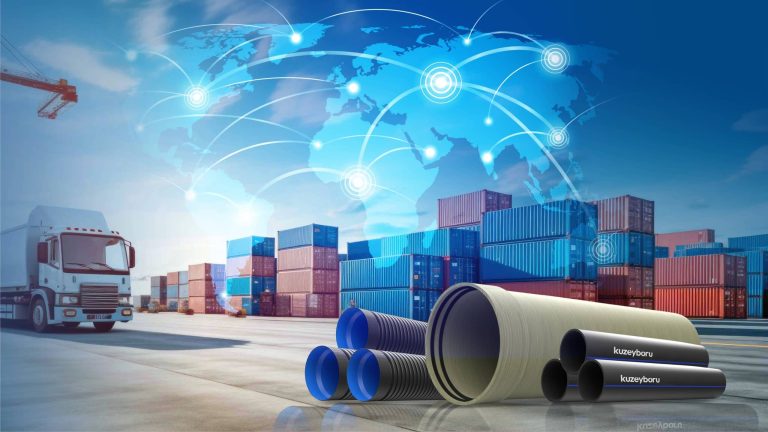
The quality validated in our laboratories becomes a value that extends beyond borders. At Kuzeyboru, we deliver products manufactured to advanced engineering standards through our quality export network reaching 105 countries worldwide. From the hot climates of the Middle East to the demanding standards of Europe, from large-scale infrastructure developments to complex engineering projects, the Kuzeyboru signature can be found across the globe. For us, every pipe is an ambassador of quality and engineering excellence extending from Türkiye to the world.