Plastic Pipe Crack Repair
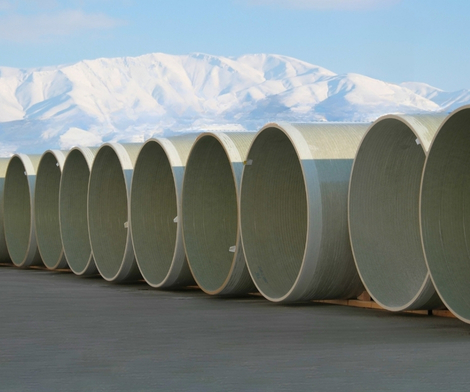
Cracks occurring in plastic piping systems (such as PE, PVC, PPRC, or GRP) do not always require welding or component replacement. Interventions performed using the correct chemical components offer fast and cost-effective solutions that extend the service life of the pipeline.
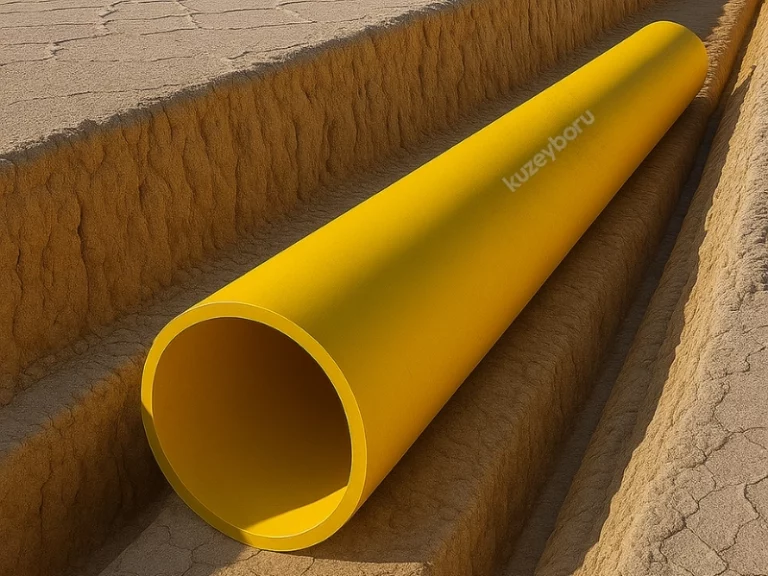
Polyethylene (PE100), Polypropylene (PP), and PVC-based piping systems utilized in modern infrastructure projects offer a service life of over 50 years, thanks to their high corrosion resistance and flexible molecular structures. However, excavation errors, improper bedding, or point impacts during transport encountered in field applications can cause damage that compromises the integrity of the pipe wall.
Chemicals used in plastic pipe crack repair are generally high-strength adhesives and filler polymers selected based on the pipe material (PVC, PE, PP) and the depth of the crack. Especially in PVC pipes, solvent-based adhesives that "melt" the surface at a molecular level and establish a new bond are preferred. In more flexible polyethylene (PE) or polypropylene (PP) pipes, cyanoacrylate derivatives with high chemical resistance or two-component epoxy resins come into play.
Permanently eliminating damage formed in plastic pipelines is possible not just by sealing the crack, but by restoring the structural integrity of the pipe. In this guide, we cover chemical interventions and professional welding techniques applied in the field with all their technical details.
Crack (Damage) Detection and Classification
Crack detection in plastic pipes is a precise process generally carried out with the help of pressure tests and acoustic listening devices to identify the source of the leak. To detect invisible capillary cracks, drops caused by pressurized air or water supplied to the pipeline are monitored, while leak traces resulting from temperature differences can be tracked via thermal cameras.
Particularly in underground or in-concrete lines, the exact point where structural integrity is compromised is determined with pinpoint accuracy without damaging the pipe, using ultrasonic detectors and moisture sensors. Before deciding on the repair method, the type of damage must be identified:
Superficial Scratches: Scratches that do not exceed 10% of the pipe wall thickness generally do not lower the pressure class of the pipe and do not require intervention.
Deep Cracks: Damage that exceeds 10% of the wall thickness but does not exhibit leakage.
Puncture and Splitting: Full damage causing pressure loss. Any deformation exceeding 10% of the wall thickness must be repaired, as it can cause the pipe to split in the long term due to the "notch effect."
Epoxy-Based Products and Resin Application Steps
In the permanent repair of plastic pipe cracks, two-component epoxy systems that create a "cold weld" effect are the most reliable solution. For application success, these three critical steps must be followed:
- Surface Preparation: The crack zone must be degreased and thoroughly roughened with sandpaper to enable the resin to adhere.
- Mixing: The resin and hardener must be mixed in ratios compliant with the manufacturer's instructions until a fully homogeneous color is achieved.
- Application and Curing: The mixture must be applied to the crack without leaving any voids, and the full curing time specified in the technical documentation must be awaited for sealing.
Repair in Pressurized Lines: Electrofusion (EF) Technology
The damaged area is covered with an EF saddle compatible with the original raw material of the pipe. The electrical current supplied to the copper resistances inside the saddle melts both surfaces, turning them into a single piece (monoblock). Polyethylene surfaces form a thin oxide layer when they come into contact with air. Before welding, this layer must absolutely be removed from the surface using mechanical scrapers. Otherwise, a "cold weld" occurs, and sealing cannot be guaranteed.
Mechanical Repair Clamps (Stainless Steel)
This is the preferred method in emergency situations where the flow cannot be interrupted or in wet/muddy environments where fusion welding is not possible. It generally consists of an AISI 304 or 316 grade stainless steel body and an EPDM rubber gasket on the inner surface. It can be used on all types of pipe materials (GRP, PVC, PE, Corrugated). This method may not fully restore the pipe's strength (pressure resistance), but it provides 100% sealing. It can be evaluated as a temporary solution in high-pressure lines and a permanent solution in low-pressure lines.
Extrusion Welding for Non-Pressurized Lines
This is the most effective method for repairing Corrugated and Spiral Wound pipes used in sewage and rainwater lines. After the damaged area is cleaned, a welding rod having the same granule structure as the pipe raw material (generally PE or PP) is melted using a hand extruder. For a sound weld, the crack zone must be opened in a "V" shape, and it must be ensured that the molten material completely penetrates the parent material. This process preserves the structural integrity of the pipe.
Section Replacement
If the damage is too large to be salvaged with localized repair kits (for example, a longitudinal split along the pipe), the damaged section must be cut out and removed from the line. The damaged part is cut. A new pipe section of the same diameter and pressure class is placed in the gap. The connection points are joined using an Electrofusion Coupler or a Sliding Coupler. This method restores the line to its first-day performance values.
Leaktightness Tests
After the repair process is completed, leaktightness tests are a critical step for safely commissioning the pipeline. To verify the success of the applied repair, the following methods are used:
Hydrostatic Pressure Test: The pipeline is filled with water, and a pressure above the operating pressure is applied to observe whether a leak occurs over a specific period.
Air Pressure Test: In cases where contact with water is not desired, pressure drops are monitored via a manometer with air pumped into the pipe to inspect for microscopic cracks.
Visual and Acoustic Control: The repair zone under pressure is checked for any dampness, foaming, or a "hissing" sound that can be detected with acoustic listening devices.
Engineering Commentary
Plastic pipe repair is not "patching," but an engineering revision. It is vital for the sustainability of the infrastructure investment that the method to be applied complies with EN 12201 (Drinking Water) or EN 13476 (Wastewater) standards. The trio of correct diagnosis, correct equipment, and trained personnel is the most effective formula to prevent costly line replacements.
Frequently Asked Questions (FAQ)
- Should electrofusion or butt fusion welding be preferred for plastic fittings?
- Although both methods offer absolute structural fusion, the choice depends on the application area constraints. Butt fusion represents a highly cost-effective solution for large-diameter pipes on linear routes. However, in confined spaces, vertical installations, or repair processes, electrofusion is technically superior as it eliminates the need for axial pipe movement and exhibits a significantly lower operational margin of error.
- Does the repair fitting have the same lifespan as the pipeline?
- Fittings manufactured according to international standards and installed via correct methods possess a design lifespan equivalent to that of the pipe itself (generally a minimum of 50 years). However, since fittings constitute the stress concentration points in the network topology layout, they are more sensitive to negative external influences—such as water hammers, excessive thermal expansion, and poor trench bedding preparation—than undisturbed straight pipe sections.
- What causes leaks in flange connections?
- The primary cause of flange connection failures is usually an uneven bolt tightening torque. When bolts are not tightened progressively and in a crosswise pattern, an axial misalignment occurs on the flange adapter stub, preventing the gasket from seating uniformly on the surface. Additionally, selecting a gasket that is not compatible with the pressure class (PN) or exhibits low resistance to the chemical medium drastically increases the risk of leakage.
- How can pressure drops be minimized in fittings like bends and tees?
- Systemic pressure drops are a direct consequence of turbulence generated during the fluid's change of direction. To smooth the flow vectors, replacing a single sharp 90° bend with two calibrated 45° bends can reduce hydraulic head losses by approximately 20% to 30%. Furthermore, it is crucial that the roughness coefficient of the fitting's inner wall matches that of the pipe, and the formation of an excessive internal weld bead during the fusion phase must be avoided.