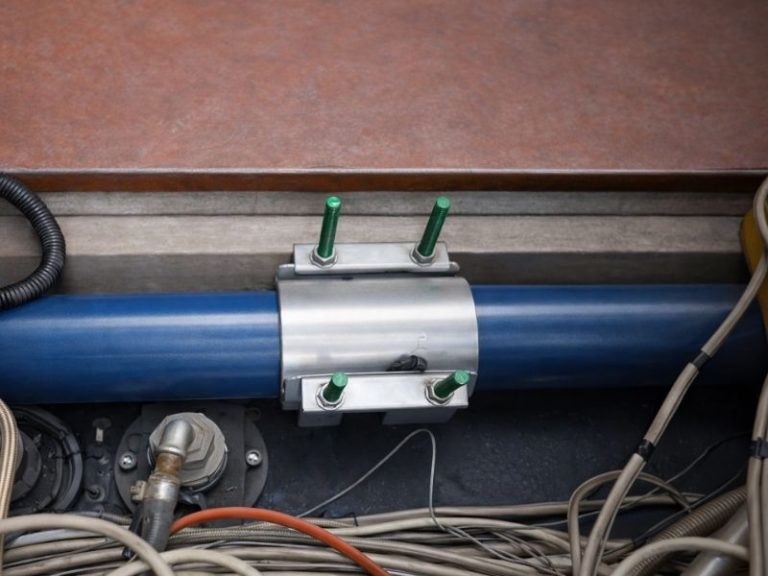
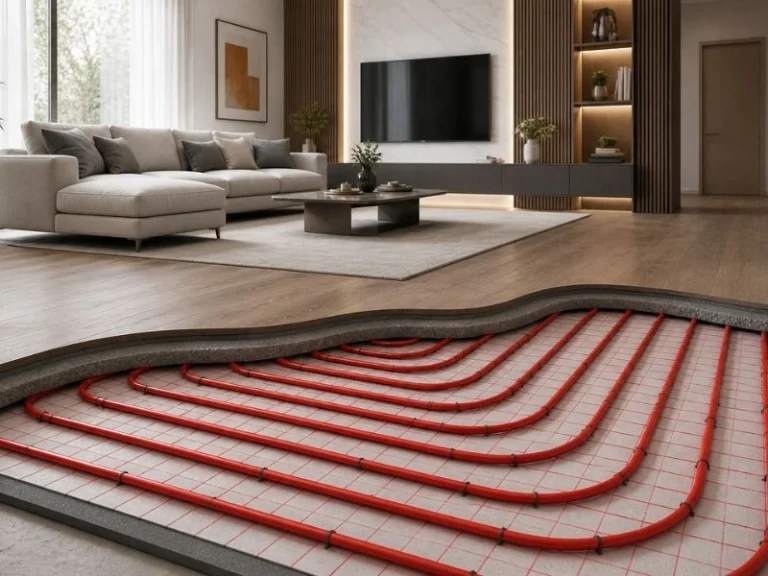
The design of fluid transfer systems and the correct selection of materials are critical parameters for the sustainability of a project. As Kuzeyboru, a leading brand in the sector, we present the use of High-Density Polyethylene (HDPE) and especially PE100 grade pipes in potable water project designs as a strategic engineering solution due to the superior performance offered by their rheological and mechanical properties. Kuzeyboru HDPE pipes manufactured by us maximize intermolecular attractive forces with their linear polymer chain structure having a low degree of branching, high crystallinity, and specific values.
Compliance Standards of HDPE Pipes for Potable Water
In order for polymeric materials to be used in potable water networks, they must be subject to strict national and international regulations (e.g., TS EN 12201-2, ISO 4427, DIN 8074/8075). Potable water HDPE pipe systems exhibit excellent stability in terms of migration limits. The fact that they do not release any toxic monomers, heavy metals, or plasticizers into the water guarantees full compliance with food contact materials and potable water regulations (WRAS, NSF/ANSI 61).
Importance of Corrosion and Rust Resistance
Unlike metallic pipes, HDPE, which is a thermoplastic polymer, is completely inert to electrochemical oxidation processes. In infrastructure systems produced under the assurance of Kuzeyboru, problems such as galvanic corrosion, tuberculation (tubercular growth), or chemical degradation due to soil aggressiveness are not observed. The chemical structure of our pipes eliminates the need for cathodic protection or an additional insulation layer even in soils with high and low pH values. This situation maintains the hydraulic smoothness of the installation at its initial level throughout its operational life and minimizes pump energy costs.
Effect on Preserving the Taste and Odor of Water
In potable water projects, it is essential to preserve the organoleptic (taste, odor, color) properties of water from its source to the end consumer. Kuzeyboru HDPE pipes are biologically inert; they do not pave the way for microorganism growth or biofilm layer formation on the inner pipe surface. Thanks to the 100% original PE100 granules and optimized melt flow indices (MFI) used in the extrusion process, chemical reactions are reduced to zero. Thus, the natural parameters of the transported water are completely isolated from corrosion by-products and external factors.
Durability Features for Long-Lasting Installations
The long-term hydrostatic strength (LTHS) of HDPE pipes is explained by linear elastic fracture mechanics and viscoelastic creep behaviors. The Minimum Required Strength (MRS) value for PE100 pipes is defined as 10 MPa at an ambient temperature of 20°C and a 50-year service life projection. Additionally, the high resistance shown by the polymer against slow crack growth (SCG) and rapid crack propagation (RCP) ensures that the system maintains its integrity under dynamic loads such as ground movements and water hammer shocks.
Internationally Accredited Laboratory Tests
The reliability of pipes used in potable water projects is proven by quality control tests conducted in Kuzeyboru's accredited laboratories. By applying OIT (Oxidation Induction Time) tests measuring the thermal stability of the material, the antioxidant lifetime of the resin (TS EN ISO 11357-6) is verified. While molecular stability during thermomechanical processes is controlled through melt mass-flow rate (MFR) analyses, internal pressure creep tests meticulously applied according to the ISO 1167 standard confirm the high rupture resistance and structural integrity of Kuzeyboru products under long-term hydraulic loads.
A Quarter-Century of Kuzeyboru Experience
Possessing a quarter-century of deep knowledge in polymer technologies and global infrastructure engineering, Kuzeyboru adopts international standards as a primary reference point at every stage from R&D processes to final product dispatch. Kuzeyboru PE100 HDPE pipes—produced thanks to our laboratory infrastructure equipped with advanced technology and digitally supported extrusion lines that instantaneously monitor wall thicknesses during production and ensure retrospective data traceability of critical process parameters—offer a macro- and micro-level homogeneous structure for potable water systems. Shaped with the vision of "Building the Infrastructure of the Future Today", this academic and engineering-based approach of ours guarantees the most reliable, most hygienic, and longest-lasting solution against both environmental and mechanical stresses in your projects.