

Blog
Which underfloor heating pipe should be chosen for energy-efficient homes?
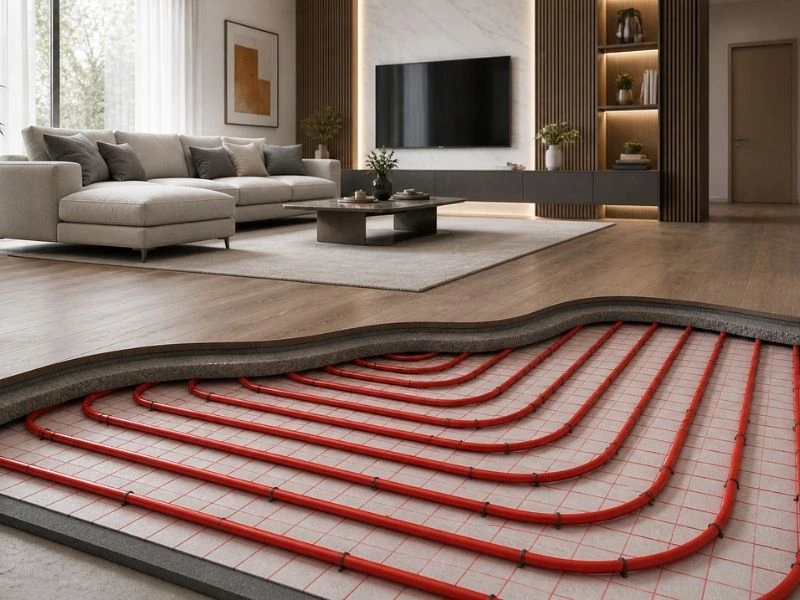
Low-temperature underfloor heating systems, which have replaced conventional radiator systems, stand out with their homogeneous heat distribution and thermodynamic advantages. However, the theoretical efficiency of these systems is directly dependent on the material characteristics and design parameters of the polymer-based pipes used.
Why Do Underfloor Heating Systems Provide Energy Savings?
Underfloor heating systems operate on the principle of heat transfer through radiation. While convectional heat transfer based on air circulation is predominant in radiator systems, lower fluid temperatures (35-45°C) are sufficient in underfloor heating due to the large surface area.
Thermal efficiency is explained by the Stefan-Boltzmann Law and convection coefficients, which depend on the temperature difference between the room air and the floor surface. The heat flux emitted per unit area (q = the amount of heat energy passing through a unit area in a unit of time, i.e., the unit heat the floor gives to the room) can be expressed by the following empirical formula (BS EN 1264):

Radiator systems generally try to heat the room by warming the water up to high temperatures like 60-80°C. This is because radiators have a small surface area and require high energy to heat the air via circulation (convection). In underfloor heating, since the entire floor acts like a heating panel (large surface area), it is sufficient to heat the water only to 35-45°C levels to provide the same comfort.
This low-temperature regime provides high COP (Coefficient of Performance) values when integrated with heat pumps and condensing boilers, offering 15-30% savings in total energy consumption.
The Impact of Pipe Diameter and Material Quality on Heat Distribution
Heat conduction in pipes is evaluated within the framework of Fourier’s Law of Heat Conduction. This law explains the fundamental operating principle of underfloor heating systems. This formula is used to calculate how fast heat passes through a material (e.g., concrete screed or ceramic). In other words, it is the fundamental rule of physics that determines the efficiency of pipes in underfloor heating systems and how long it will take for the room to warm up. The heat transfer rate (Q) occurring across the pipe wall is directly proportional to the material’s thermal conductivity coefficient (λ), surface area (A), and temperature gradient (ΔT):

Here, the pipe diameter and wall thickness determine the total thermal resistance (Rt ) of the system. As material density and the degree of crystallinity increase, conductivity increases, but flexibility decreases. For optimum heat distribution, pipe spacing (modulation) and fluid velocity should be calculated to keep the system’s Reynolds number (Re) in the turbulent flow regime; thus, the film coefficient on the inner surface of the pipe is maximized to improve heat transfer.
Differences Between PE-RT and PE-XB Pipe Options
The two most common solutions used in the industry are PE-RT (Polyethylene of Raised Temperature) and PE-XB (Cross-linked Polyethylene) pipes. In light of academic literature and laboratory tests, these two materials differ by the following characteristics:
- Molecular Structure: PE-XB forms chemical cross-links using the silane method during the production process. PE-RT, on the other hand, reaches high temperature resistance without the need for cross-linking, thanks to its special molecular chain structure (octene branching).
- Weldability: Since PE-RT has a thermoplastic structure, it is suitable for fusion welding, which provides a repairability advantage in the construction environment. PE-XB is thermoset in character and can only be joined using mechanical fittings.
- Flexibility (Modulus of Elasticity): PE-RT pipes generally have a lower modulus of elasticity, which allows for smaller bending radii during installation, providing ease of setup.
Considerations for a Long-Lasting Installation
The Oxygen Barrier (EVOH) layer is of critical importance for the system to maintain its 50+ year design life. Oxygen diffusion leads to corrosion of metal components in the system (collectors, pumps, etc.) and biofilm formation. According to the DIN 4726 standard, oxygen permeability should be below 0.32 mg/(m^2 x d) at 40°C.
Additionally, expansion joints should be planned by taking the thermal expansion coefficient (α) into account. The hydrostatic strength of the pipe must be verified by extrapolation tests conducted according to ISO 9080 standards.
Transparent Investor Relations and Corporate Structure
Kuzeyboru develops engineering solutions for PE-RT and PE-XB underfloor heating pipe systems based on energy efficiency, long-lasting use, and sustainable production criteria. The quality control systems used in production processes, R&D studies, and test applications in accordance with international standards contribute to the long-term protection of product performance.
Continuing its operations with its modern production infrastructure and engineering-oriented approach, Kuzeyboru evaluates quality, durability, and sustainability criteria together for pipe systems used in infrastructure and superstructure projects. The company’s corporate management approach supports the regular and controlled execution of production, quality, and sustainability processes.
Competing in the League of the Best
In addition to its production and engineering activities, Kuzeyboru also carries out work in the fields of sports and social responsibility. The Kuzeyboru Sports Club, competing in the Sultans League, continues its activities with projects and infrastructure works that contribute to the development of women’s volleyball.
This approach, which supports teamwork, sustainable development, and a sense of discipline, reflects Kuzeyboru’s goal of creating long-term contributions not only in production processes but also in social areas.
Related Articles

PPRC Pipes and Fittings: Zero Errors in Hot and Cold Water Installations
PPRC pipes and fittings, which set the standards especially in hot and cold water lines, stand out

WHAT IS GRP (GLASS REINFORCED POLYESTER) PIPE? AN INDISPENSABLE CANDLE FOR LARGE-SCALE PROJECTS.
GRP (Glass Reinforced Polyester or Glass Fiber Reinforced Plastic) is a composite material that

The Key to Comfort in Underfloor Heating Systems: PE-RT and PE-XB Pipes
The Key to Comfort in Underfloor Heating Systems: PE-RT and PE-XB Pipes In modern building
Related Articles
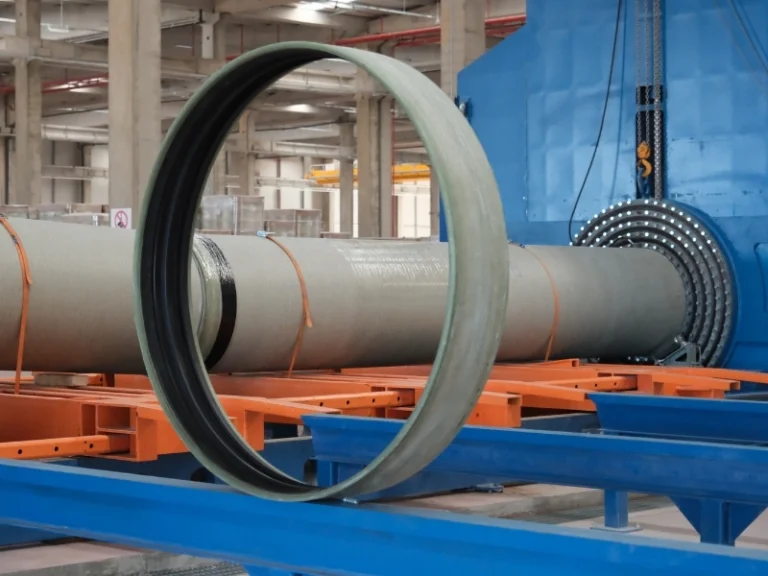
GRP Pipes and Fittings: What Are the Long-Lasting and Durable Solutions for Challenging Conditions?
The service life of a pipeline is often determined by how much the field conditions demand beyond the…

Pipe Selection in Agricultural Irrigation Projects: HDPE or PVC?
Global climate change necessitates the design of agricultural irrigation networks with maximum efficiency.
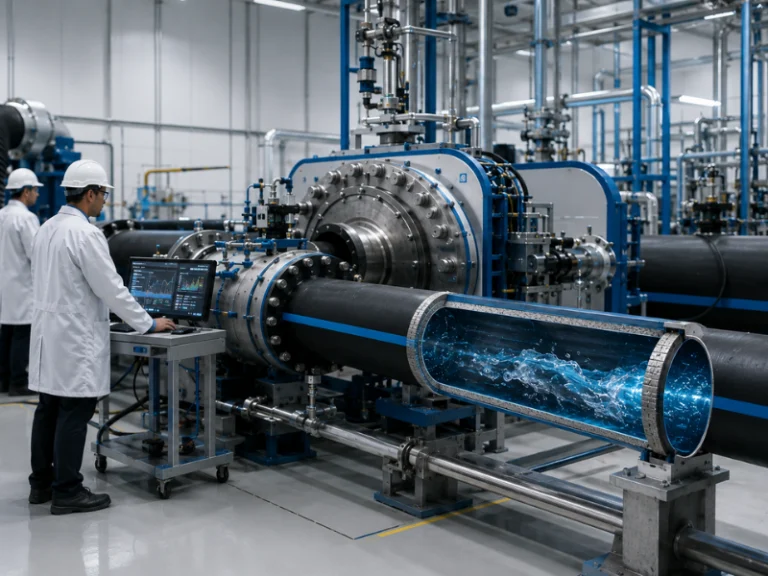
Quality Control Processes in Pipe Systems: Durability and Service Life Tests Conducted in Accredited Testing Laboratories
A pipeline’s ability to remain in service for 50 years—or even longer—begins with the tests conducted before it…