What is an Oxygen Barrier in Underfloor Heating? Why Kuzeyboru EVOH Pipe?
In modern thermodynamic applications, the efficiency of closed-circuit radiant (underfloor) heating systems depends not only on the heat transfer coefficient but also on the chemical stability of the system. The macromolecular structures of standard polymers allow microscopic gas permeation. Over time, this causes atmospheric oxygen to seep into the heating water, progressively corroding the metallic components (combi boilers, circulation pumps, manifolds) that form the heart of the entire installation. The engineering solution that halts this destructive chemical reaction is oxygen-barrier pipe technology, coated externally with a specialized polymer.
1. Corrosion Caused by Oxygen Diffusion in Heating Systems
In closed-circuit heating systems, there is a continuous concentration difference between the oxygen partial pressure of the atmospheric air outside the pipe and the dissolved oxygen level of the water inside the pipe. According to Fick's First Law of Diffusion, gas molecules tend to move from a high concentration to a low concentration:
J = -D (dc/dx)
Here, J represents the diffusion flux (the rate of gas passage), D represents the diffusion coefficient of the polymer, and dc/dx represents the concentration gradient formed along the wall. The apolar chain spacings of standard polyethylene (PE) matrices are wide enough for the passage of oxygen (O₂) molecules.
When free oxygen mixed with water comes into contact with ferrous heat exchangers, valves, and pumps in the system, it initiates an electrochemical oxidation (corrosion) reaction (4Fe + 3O₂ → 2Fe₂O₃). As a result of this galvanic reaction, metal surfaces dissolve, forming a heavy, black magnetite sludge inside the system. This sludge increases hydraulic head loss by narrowing pipe cross-sections, impairs the thermal conductivity of water, and causes pumps to seize and burn out due to cavitation and mechanical wear.
2. EVOH Layer Technology and Oxygen Barrier Protection Mechanism
The most flawless insulator developed by polymer science against gas permeability is the EVOH (Ethylene Vinyl Alcohol) copolymer. The core mechanism that makes EVOH an oxygen barrier is the high proportion of polar hydroxyl (-OH) groups in its macromolecular chain.
These hydroxyl groups form exceptionally strong intermolecular hydrogen bonds between the polymer chains. These bonds transform the polymer matrix into such a tight and dense crystalline structure that it becomes thermodynamically difficult for oxygen molecules—which are apolar gases—to diffuse through this tightly woven network.
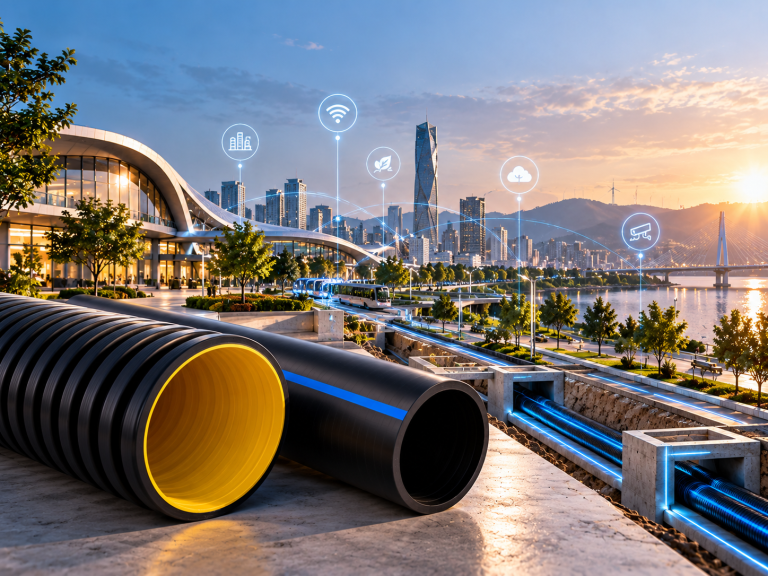
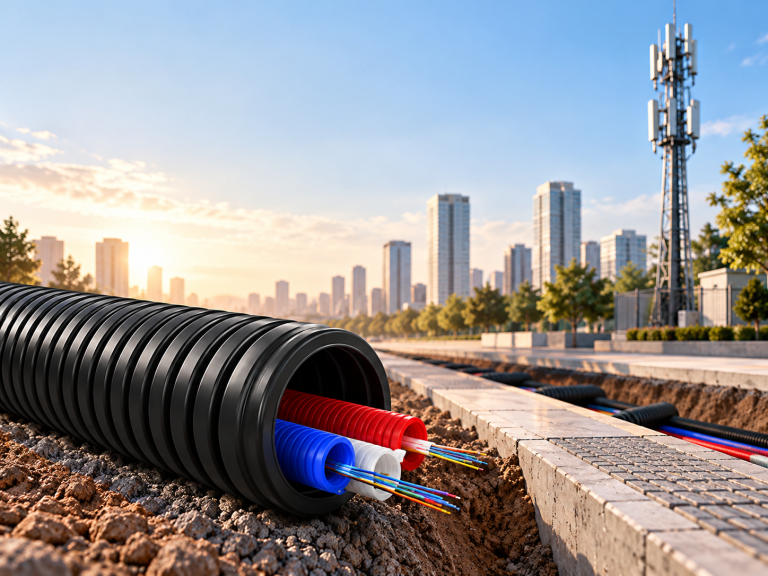
Through an advanced manufacturing process called co-extrusion in pipe production, a specialized adhesive layer of micronized thickness is coated onto the main PE-RT or PE-XB pipe, followed by the EVOH layer. According to the DIN 4726 standard, the oxygen permeability of plastic pipes used in heating systems must not exceed specified limit values. The EVOH (Ethylene Vinyl Alcohol) barrier layer significantly reduces oxygen diffusion through the pipe wall, limiting oxygen ingress into the system. Thus, it contributes to mitigating the risk of oxygen-induced corrosion on metal components within the heating system.
3. Extending Combi Boiler and Radiator Lifespan with Kuzeyboru EVOH Pipes
In underfloor heating systems, the pipe is designed to remain beneath the screed concrete for 50 years; however, heat sources such as combi boilers, heat pumps, and brass manifolds are the most costly and sensitive components of the system.
Optimized in Kuzeyboru R&D laboratories, EVOH-barrier PE-RT and PE-XB pipes not only provide excellent heat transfer to the floor mass but also guarantee that the installation water remains in the form of dead water (oxygen-free and reaction-free water) throughout its lifespan. With the complete elimination of oxygen ingress, rusting, scaling, and magnetite sludge formation are halted or reduced. This ensures that circulation pumps operate at nominal flow rates without fatigue, heat exchangers remain unblocked, and the system heats with the thermal efficiency of day one (minimum energy consumption) for half a century.
FREQUENTLY ASKED QUESTIONS (FAQ)
1. What happens if an underfloor heating pipe without an oxygen barrier is used?
Oxygen in the air mixes with the water through the pipe wall, leading to corrosion (rusting) in the combi boiler, valves, and metal parts, as well as the formation of magnetite sludge that clogs the system.
2. In which layer of the pipe is the EVOH barrier located?
The position of the EVOH (Ethylene Vinyl Alcohol) barrier layer depends on the layer design of the pipe and co-extrusion technology. In multi-layer pipe structures, EVOH is generally positioned between polyethylene (PE) layers. In five-layer structures, the EVOH layer is bonded to the polyethylene layers via adhesive layers.
3. What is the flexibility degree of Kuzeyboru oxygen barrier pipes?
Since the EVOH and adhesive layers are applied in micronized thicknesses that do not disrupt the viscoelastic structure of the pipe, the pipe 100% retains the maximum flexibility and easy-laying capability in tight radiuses offered by PE-RT or PE-XB.
4. How is sediment and sludge formation prevented in underfloor heating installations?
It is prevented by using EVOH (oxygen-barrier) pipes compliant with DIN 4726 standards, which block the transition of oxygen gas—the initiator of the corrosion reaction—into the water at the molecular level.
5. In what diameters are Kuzeyboru EVOH pipes produced?
They are produced as standard in outside diameters of 16 - 20 mm, where hydraulic friction and heat transfer are most optimal for under-screed radiant heating and mobile radiator installations. Please contact Kuzeyboru for project-specific dimension and production requests.