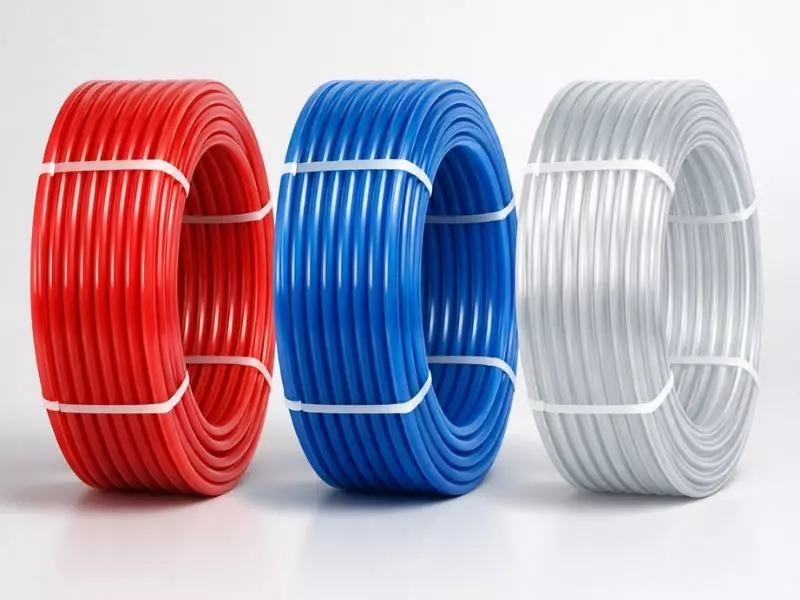
PEX pipes are plumbing pipes with enhanced thermal resistance, obtained by cross-linking the molecular structure of high-density polyethylene (HDPE) raw material through chemical or physical methods.
During the cross-linking process applied in PEX production, hydrogen atoms are detached from the polymer chain, enabling carbon atoms to bind directly to one another. This creates a three-dimensional, lattice-shaped macromolecular network structure.
The resulting structure eliminates the melting point of the material, making it possible for PEX pipes to maintain their form even under high temperature (+95°C) and pressure conditions.
Technical Structure and Main Properties of PEX Pipes
The cross-linking process applied during the production phase of PEX pipes ensures that carbon atoms bind directly to each other by detaching hydrogen atoms from the molecular chain. The three-dimensional, lattice-form macromolecular network structure resulting from this process provides structural stability by entirely eliminating the melting point of the material. Thanks to this technological infrastructure, PEX pipes can safely serve under high temperature and variable pressure conditions without losing their form. Its smooth inner surface structure eliminates problems such as scaling and corrosion, keeping the fluid flow rate constant throughout its service life.
High Temperature and Pressure Resistance
PEX pipe systems exhibit superior resistance to a continuous operating temperature of 95°C and instantaneous temperature fluctuations up to 110°C. This thermal stability allows the product to maintain its structural integrity, particularly in hot water transmission lines and industrial heating systems. Retaining its mechanical properties even at high temperature values makes PEX pipes one of the most reliable solutions for radiator and central heating projects. Manufactured to Kuzeyboru’s engineering standards, these pipes can operate for many years under challenging operating conditions without any performance loss.
Oxygen Barrier (EVOH) and Corrosion Protection
The EVOH oxygen barrier, integrated through special production techniques, prevents oxygen molecules in the air from passing through the pipe wall thickness and mixing with the system water. Designed in accordance with DIN 4726 standards, this barrier structure prevents metallic components within the system—such as combi boilers, boilers, and radiators—from undergoing oxidation and rusting. Preventing oxygen ingress minimizes bacterial growth and sludge formation inside the installation, thereby maintaining heat transfer efficiency. This feature is a critical technical advantage that extends the total operating lifespan of heating systems and lowers maintenance costs.
Superior Flexibility and Shape Memory Properties
PEX pipes possess a bending capability with a radius of at least 5 times their outer diameter (R=5xD), providing installation teams with great freedom of movement during application. The "thermal memory" feature, particularly observed in PEX-a type pipes, allows the pipe to return to its original form when heated after any crushing or impact. This flexible structure reduces the use of elbows and similar fittings during installation, lowering the hydraulic resistance of the system and increasing sealing safety. Exhibiting high resistance against impacts, this structure supports a safe installation process even under harsh application conditions on construction sites.
PEX Pipe Application Areas and Installation Methods
PEX pipe systems have a wide range of applications in the construction and industrial sectors due to their versatile technical properties. They are preferred at many different points, from underfloor heating systems that determine the comfort conditions of modern structures to pressurized air lines of industrial plants. Thanks to their hygienic structure, these pipes can be safely used in drinking water lines, while also yielding effective results in acidic or basic environments owing to their chemical resistance. Kuzeyboru’s production in compliance with TS 10762-2 standards guarantees that international quality norms are met in each application area.
Underfloor Heating and Mobile Radiator Systems
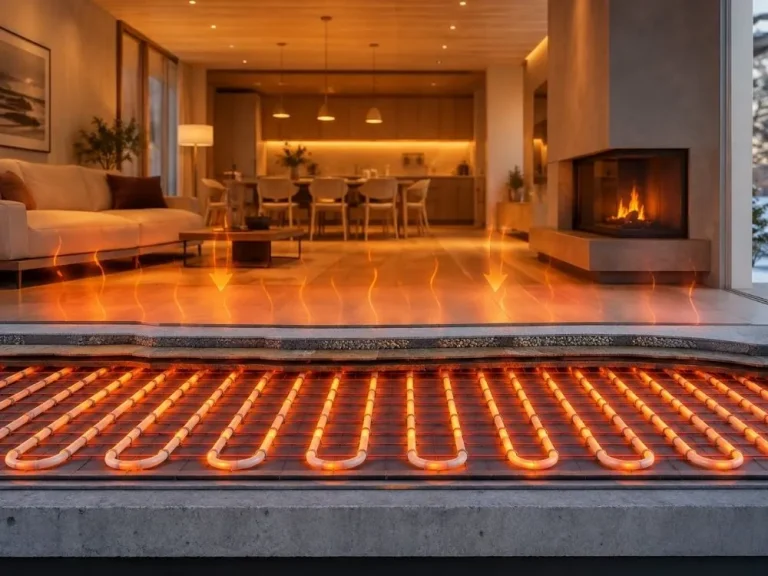
The most common area of use for PEX pipes is underfloor heating and mobile radiator installations, which provide homogeneous heat distribution and energy efficiency. In underfloor heating applications, the pipes laid over styrofoam panels using snail or serpentine patterns in accordance with engineering calculations ensure equal heating of spaces. In mobile installation systems, a single-piece line is drawn from the manifold to each radiator or faucet, preventing the use of fittings under the floor. This method completely eliminates potential leakage risks while making the maintenance and control processes of the system extremely simple.
Industrial Solutions, Snow and Ice Melting Systems
In addition to buildings, PEX pipe technology is actively utilized in snow and ice melting systems to prevent freezing on outdoor areas, ramps, and roads. Furthermore, the high strength and sealing success of the product make it the preferred choice in pressurized air systems and gas transport lines of industrial plants. Owing to the high resistance it shows against chemical substances, it also forms a secure channel for the transmission of acidic or basic fluids. Kuzeyboru PEX pipes offer sustainable operational efficiency by preserving their chemical structure even under these demanding industrial conditions.
Advantages of Choosing PEX Pipes
The use of PEX pipes offers significant cost and performance advantages to the user and the project, both during the installation phase and in long-term use. Its lightweight structure accelerates transport and assembly processes, while its non-corrosive inner surface directly contributes to the preservation of water quality and energy savings. Disadvantages observed over time in metal pipe systems, such as narrowing, scaling, and corrosion, are completely eliminated in PEX systems. Furthermore, being 100% recyclable at the end of its service life places this product in the category of eco-friendly and sustainable building components.
- Near-Zero Leakage Risk: Produced in coils, PEX pipes are laid in a single piece from the manifold to the endpoint, minimizing the risk of leaks that could originate from joints.
- Energy Savings: Thanks to the low thermal conductivity coefficient, heat losses during hot water transport are kept at the lowest level, which directly provides energy efficiency.
- Scaling Resistance: The smooth inner surface structure does not allow lime and mineral accumulation; thus, the water flow rate and pressure of the installation remain constant over the years.
- Easy Replacement Opportunity: When conduit (sleeved) pipe systems are preferred, any damage that may occur to the pipe can be easily renewed by pulling the pipe through the conduit without breaking the floor.