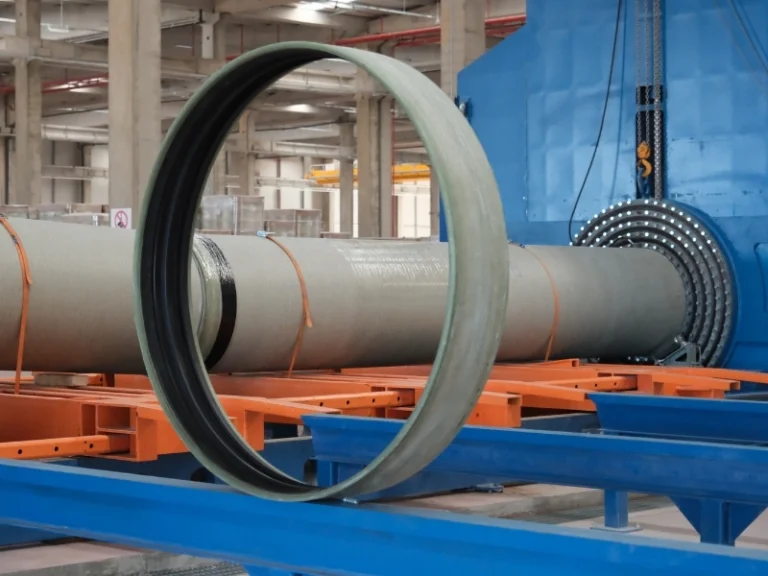
Different tools are used to measure pipe diameter depending on the size of the pipe and the desired precision: Caliper: Used to measure both the inner and outer diameters of small and medium-diameter pipes with millimetric precision. Pi Tape / Diameter Tape: Special tape measures used to directly read the outer diameter of large-diameter pipes. While measuring the circumference, it gives the diameter value directly thanks to the special scale on it. Tape Measure: Used to measure the circumference and perform mathematical calculations on very large-diameter pipes.
Step-by-Step Guide
Outer Diameter (OD) Measurement with Caliper
The wide jaws of the caliper are opened. The caliper is placed on the outer surface of the pipe perpendicular to the pipe cross-section. The jaws are gently closed until they fully contact the pipe surface. The digital or analog value on the caliper is read.
Inner Diameter (ID) Measurement with Caliper
The smaller jaws located at the top of the caliper are used. The jaws are placed inside the pipe and opened outwards until they make full contact with the inner walls of the pipe. Ensure the caliper is on a straight axis and read the value.
Calculating Diameter via Circumference with a Tape Measure
In large diameter pipes (e.g., 1000 mm and above) where the caliper is insufficient or when a practical field measurement is required, the following method is used: The outer circumference (C) of the pipe is measured by wrapping the tape measure one full turn. Ensure that the tape is flat and fully seated on the pipe. The obtained circumference is divided by Pi (π ≈ 3.14159). OD = C / π (Example: The outer diameter of a pipe with a circumference of 314 mm is 314 ÷ 3.14159 ≈ 100 mm.)
Key Considerations in Measurement
Plastic pipes (PE100, Corrugated, etc.) can be affected by external factors due to their flexible nature. For an accurate measurement, the following points must be considered: Ovality: Plastic pipes may lose their perfect circular shape and become ovalized due to production, storage, or transport conditions. Therefore, measurements should be taken from two different axes perpendicular to each other (X and Y axes), and the true outer diameter should be found by taking the arithmetic average of these two values. Temperature Effect: Thermoplastic materials expand or contract with temperature. According to international standards (ISO), the most accurate measurement results are obtained after the pipe has been conditioned at room temperature. End Cuts: When the pipe is cut, burrs or inward narrowing may occur at the ends. Measuring at least one pipe diameter away from the end of the pipe or from a clean surface free of cutting errors yields healthier results.