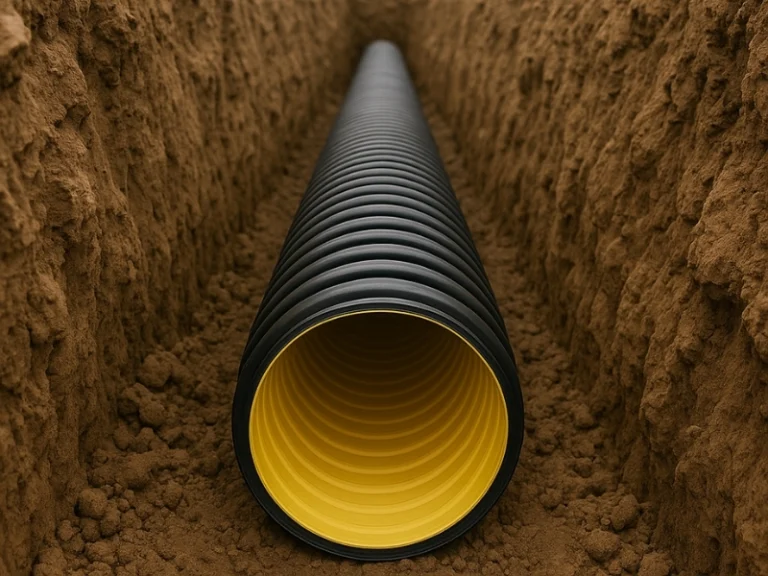
What is a Wastewater Pipe?
A wastewater pipe is a specialized piping system engineered for the safe, reliable, and hygienic conveyance and disposal of used water (such as kitchen, bathroom, toilet effluents, or industrial liquids) away from residential buildings, industrial facilities, and municipal infrastructures.
As a fundamental building block of modern civil infrastructure and superstructure engineering, wastewater pipes are of strategic importance for public health, environmental safety, and structural integrity.
Materials Used
The selection of materials for modern wastewater systems depends strictly on the chemical composition of the fluid being transported (acidic/alkaline balance) and the external loads the pipeline will sustain (static soil loads and dynamic traffic loads). Today, the most widely specified materials include:
PVC (Polyvinyl Chloride): Standard for building interior drainage systems due to its high structural rigidity, excellent chemical resistance, and inherent flame-retardant properties.
PP (Polypropylene): Available in specialized acoustically insulated variations known as "silent pipes." It exhibits superior thermal resistance to high-temperature discharges (boiling water) and harsh chemicals compared to PVC.
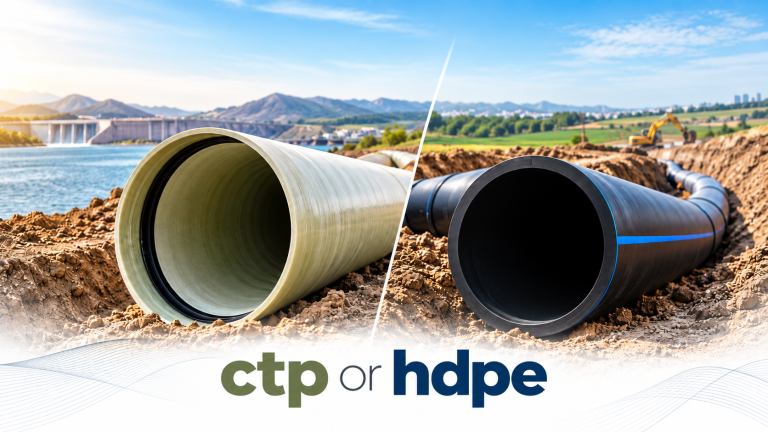
HDPE (High-Density Polyethylene): Highly preferred for heavy municipal infrastructure and buried underground main lines due to its outstanding flexible matrix structure and exceptional impact resistance.
Composite and GRP (Glass Reinforced Plastic): Utilized in large-diameter trunk lines and high-scale industrial projects requiring maximum structural strength under extreme conditions.
Wastewater Pipe Types
Wastewater piping configurations are categorized into three primary domains based on their specific application zones and structural profiles:
Building Interior Wastewater Pipes: Generally manufactured from PVC or PP. With rising modern comfort and acoustic standards, the deployment of multi-layer silent pipes has become a standard engineering practice.
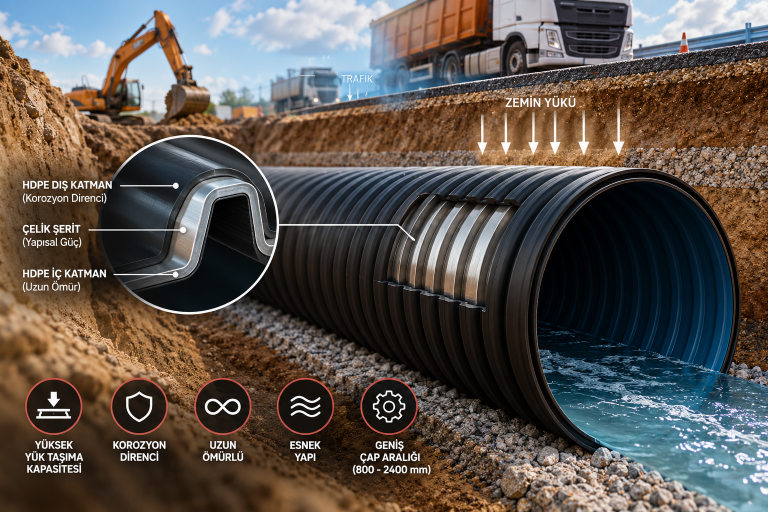
Infrastructure and Main Sewer Pipes: Utilized in municipal sewage systems, these are typically produced with a corrugated profile. The external ribbed structure exponentially increases the pipe's ring stiffness (SN rating) against static soil burial loads, while the hydraulically smooth inner wall maximizes flow capacity.
Drainage Pipes: Perforated pipes usually made from PVC or PE bases, specifically engineered to collect and channel subsurface groundwater tables.
Installation and Laying Procedures
Achieving an enduring, leak-free wastewater network depends as much on meticulous workmanship as it does on material quality. This process involves two distinctly specialized technical execution disciplines:
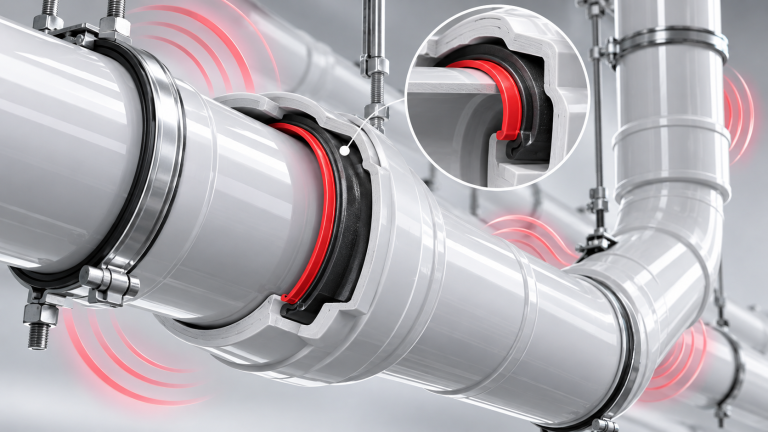
1. Superstructure Installation (Building Interior): In internal plumbing systems (kitchens, bathrooms, toilets), absolute seal integrity is paramount. Pipes are connected utilizing elastomeric socket joints or solvent cement welding. Pipelines must be rigidly anchored to walls or ceilings using heavy-duty clamps to prevent structural sagging over time. Additionally, horizontal runs must maintain an exact, calibrated slope to ensure seamless gravity flow.
2. Infrastructure Installation (Underground Burying): Laying structural sewage lines (Corrugated, GRP, etc.) requires robust earthworks. First, trenches are excavated using heavy machinery. A granular sand bed is laid at the trench bottom (bedding) to ensure uniform pipe seating. Once pipes are precisely aligned and jointed, backfilling and mechanical compaction are performed incrementally in layers (embedment) to safeguard the pipe against crushing under the weight of the overhead soil prism. Proper compaction is the most critical factor extending pipeline service life.
Sealing and Leak Prevention Measures
Wastewater exfiltration causes catastrophic rebar corrosion in building foundations and severe environmental contamination. To guarantee absolute sealing, long-lasting EPDM gaskets conforming to EN 681 international standards must be utilized. Upon completion of the installation and prior to backfilling, the system's structural integrity must be verified through rigorous hydrostatic or pneumatic pressure testing.
Frequently Asked Questions
- What is the typical service life of wastewater pipes?
- When precisely engineered and installed in compliance with international standards (such as TS EN norms), thermoplastic wastewater piping systems possess an operational design lifespan of at least 50 years.
- What is the "SN Rating" and why is it critical?
- The SN (Nominal Stiffness) value denotes the ring stiffness of a flexible pipe, representing its radial structural resistance against external static (soil) and dynamic (traffic) loading over time. For areas subject to vehicular traffic, SN8 class pipes must be specified, whereas SN4 class pipes are perfectly adequate for green fields and landscaped zones.