What are the criteria for using PE80 polyethylene pipes in natural gas and drinking water transmission lines?
Fundamental Characteristics of PE80 Polyethylene Pipes
PE80 is a specific polymeric material in the Medium Density Polyethylene (MDPE) class of the thermoplastic pipe industry, possessing an outstanding balance of high flexibility and toughness. In material science, the number "80" expresses the Minimum Required Strength (MRS) of the polymer; this represents the minimum intrinsic circumferential hydrostatic stress of 8.0 MPa that the material can withstand for 50 years at an ambient temperature of 20°C.
Safety Requirements in Natural Gas Transmission Lines
The safe transfer of fossil fuels is a process that demands zero-error tolerance. The PE80 raw material used in natural gas pipe production must meet the strict mechanical and thermal safety conditions determined by international ISO 4437 and EN 1555 standards.
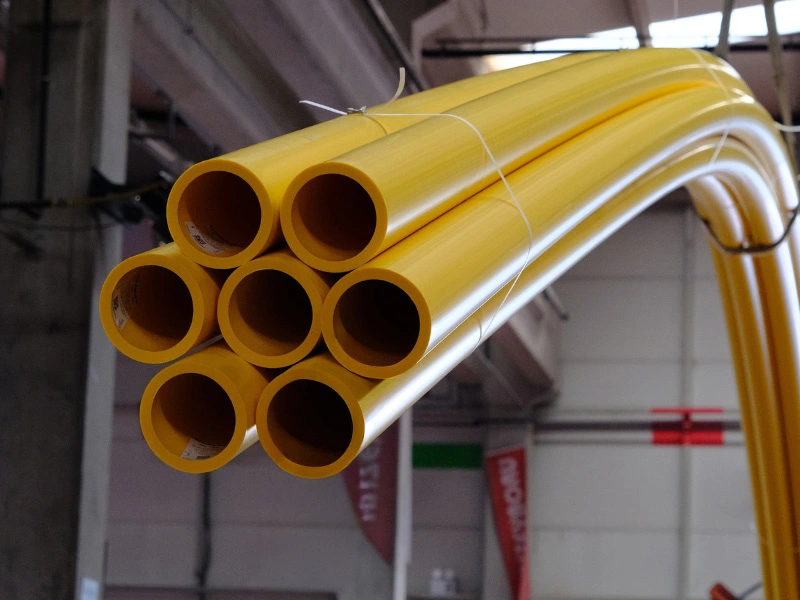
Against the phenomenon of Rapid Crack Propagation (RCP), which is the greatest engineering risk in natural gas lines, the molecular morphology of PE80 exhibits a superior damping capacity. Extruded in yellow or with yellow stripes on black for easy distinction in the field, these pipes exhibit high chemical inertness against the corrosive effects of gas and underground sulfate/chloride ions, eliminating the risks of explosion or leakage at the molecular level.
PE80 Standards in Potable Water Projects
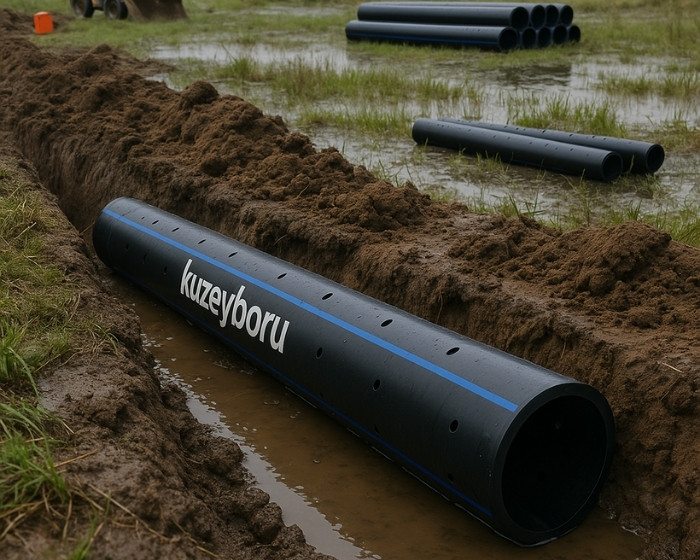
Produced in blue or with blue stripes on black in accordance with ISO 4427 standards, these pipes never alter the organoleptic properties (taste, odor, color, pH) of water. Tubercle formation (internal wall calcification) and galvanic corrosion seen in traditional ductile iron or steel pipes are prevented thanks to the smooth internal wall morphology of PE80. This smoothness minimizes the friction coefficient in hydraulic calculations, lowering the energy consumption of network pumps and reducing the risk of cavitation.
Material Flexibility and Resistance to Ground Movements
The most prominent macromolecular advantage of the original PE80 raw material is that it has a lower modulus of elasticity compared to the PE100 (High-Density Polyethylene - HDPE) class, and therefore a much higher flexing capability. This viscoelastic structure allows the pipeline to act like a spring against underground dynamics such as seismic fluctuations, tectonic stresses in fault lines, and differential settlement.
The fact that the bending radius can decrease up to approximately 20 times the pipe outer diameter minimizes the use of fittings (elbows) during route changes. In this way, hydraulic pressure losses are prevented, and the general operational reliability of the system is maximized by reducing the number of electrofusion/butt welding points.
Internationally Valid Test Certificates
Each batch of PE80 pipes leaving the production line is subjected to rigorous thermomechanical tests in accredited laboratories before being integrated into global infrastructure projects. The OIT (Oxidation Induction Time) test measuring the thermal oxidation resistance of the material, tensile strength, melt flow index (MFI), and most importantly, long-term hydrostatic pressure tests applied at specific temperatures (20°C and 80°C) simulate the 50-year design life of the material.
Safe Shipment to 5 Continents and 105 Countries
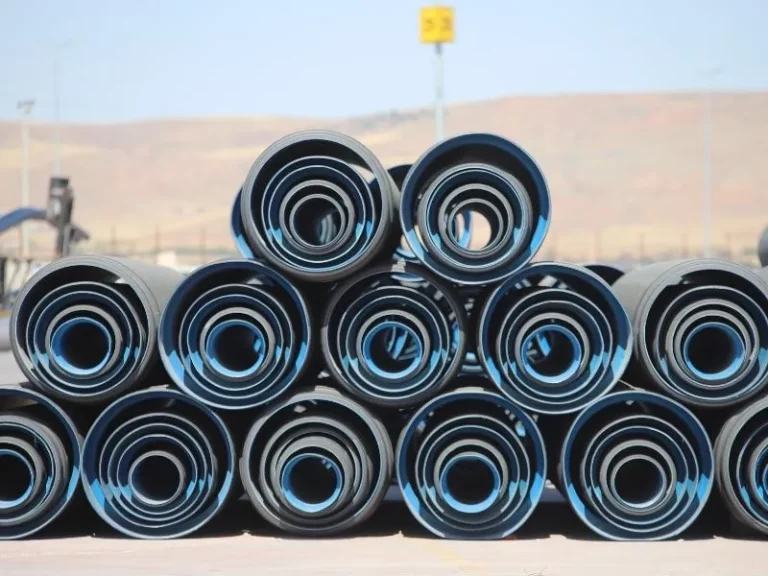
The yellow PE80 natural gas pipes produced by Kuzey Boru with advanced extrusion technologies and passed through strict quality control phases are shipped in full integration with global logistics dynamics. High-quality production engineering of Kuzey Boru decisively prevents photo-oxidative degradation that may occur in polymer chains during open-air storage and transoceanic long shipping processes. Today, shipments carried out under the assurance of Kuzey Boru to 105 different countries across 5 continents with the most challenging climatic conditions and geographical obstacles are the most concrete guarantee that our thermoplastic infrastructure elements can be delivered to the project without suffering any structural fatigue or morphological deformation.