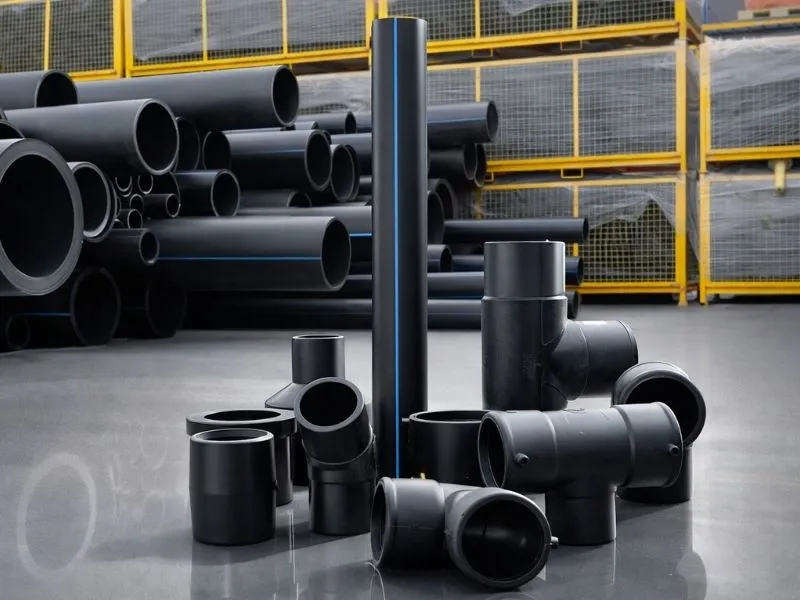
Plastic pipe systems, which form the backbone of fluid transfer in modern engineering projects, can only fulfill their duties when integrated with correctly selected fittings.
Produced from polymeric materials such as polyethylene (HDPE), polypropylene (PP), or PVC, these components are critical nodes ensuring the integrity of the system. Plastic pipe fittings carry the fundamental advantages offered by polymers—such as corrosion resistance, chemical inertness, and lightweight nature—while being engineered in compliance with high pressure classes (PN) and environmental stress cracking resistance (ESCR) requirements.
These parts do not merely serve a jointing function; they also embody viscoelastic properties that tolerate thermal expansions within the system.
The Importance of Fittings
The lifespan and reliability of a pipeline are only as strong as the strength of the weakest link in the system, and these links are generally the joint points. The importance of fittings manifests itself in preserving the hydraulic balance and ensuring sealing safety.
An incorrectly selected or improperly installed fitting leads to localized pressure losses, turbulences, and ultimately fatigue damages in the system. Mechanical stresses created by ground movements in underground applications, and UV exposure along with thermal fluctuations in aboveground applications, test these joint points first.
Therefore, selecting fittings suitable for the dynamics of the project is one of the most critical steps that lowers operational costs and guarantees the design life of the system (generally 50 years and above).
Use of Elbows and Tees
Pipelines cannot progress linearly due to the topographical and architectural necessities of the site.
The use of elbows, which come into play to change the direction of the flow, directly affects the hydraulic profile of the system. As the fluid passes through the elbow, it encounters an acceleration and a resistance to changing direction.
This condition causes localized pressure increases (thrust forces) on the inner wall. During the design stage, the risk of water hammer is minimized by using wide-angle elbows (for instance, two 45° elbows instead of one 90° elbow) as much as possible.
When it is necessary to branch off from the system—that is, to divert a portion of the fluid in the main line to a different direction—tees are used. Since the use of tees means dividing the flow asymmetrically, fluid dynamics calculations gain immense importance, especially in high-flow industrial lines.
In both elbow and tee installations, besides the welding quality, the use of thrust blocks (anchorage) to damp the axial forces the component will be exposed to must not be neglected.
Coupling and Flange Connections
Used to ensure the continuity of linear lines or to revise damaged areas, the coupling (sleeve) is the most fundamental jointing element of pipe systems. Applied via electrofusion or butt fusion technologies, couplings provide a homogenous joint at the molecular level between two pipe ends, transforming the line into a single-piece (monolithic) structure.
In contrast, flange connections are mandatory at points where the system needs to be integrated with mechanical equipment (pumps, valves, flowmeters) or where transitions to different material groups (e.g., from steel to plastic) are required.
Flanged systems offer high rigidity while allowing equipment that requires periodic maintenance to be easily disassembled. A successful flange installation depends on the correct welding of the flange adaptor (stub end) and tightening the bolts on the steel backup ring in a cross sequence at torque values specified by the manufacturer.
Gasketed Systems
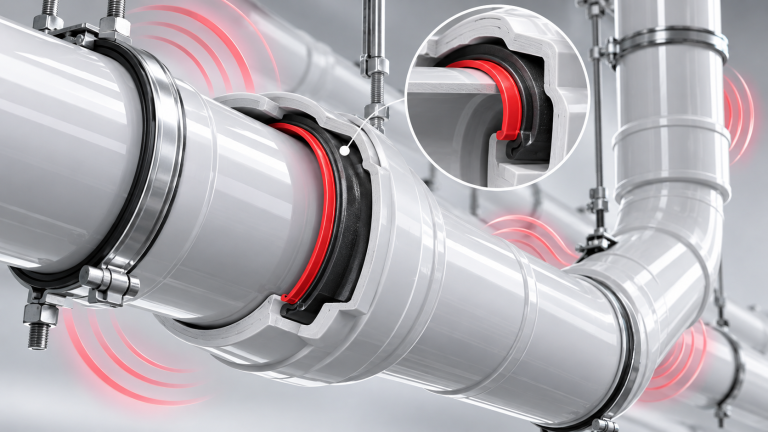
In projects where mechanical connections and flexibility are at the forefront, gasketed connection systems offer unique advantages. The elastomeric gaskets (EPDM, NBR, SBR) at the heart of these systems compress when the pipes are pushed together, forming a radial sealing barrier. They are particularly preferred in gravity-fed (gravity-flowing) wastewater and sewage lines or in agricultural irrigation.
The greatest engineering advantage of gasketed systems is their capacity to absorb thermal expansions and contractions within themselves. Furthermore, union (rekor) connections, which offer practical install-and-remove opportunities in indoor installations or narrow assembly areas, are among the most common examples of this mechanical and gasketed sealing principle. Thanks to their threaded structures and the O-ring systems they contain, they prevent leakage even under high pressure.
Application Examples
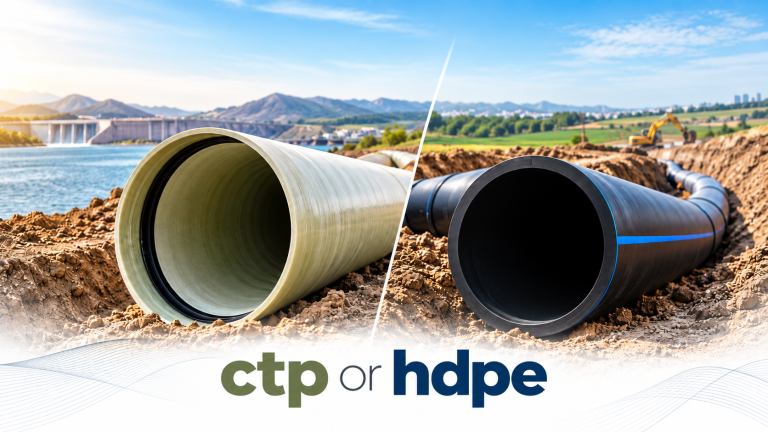
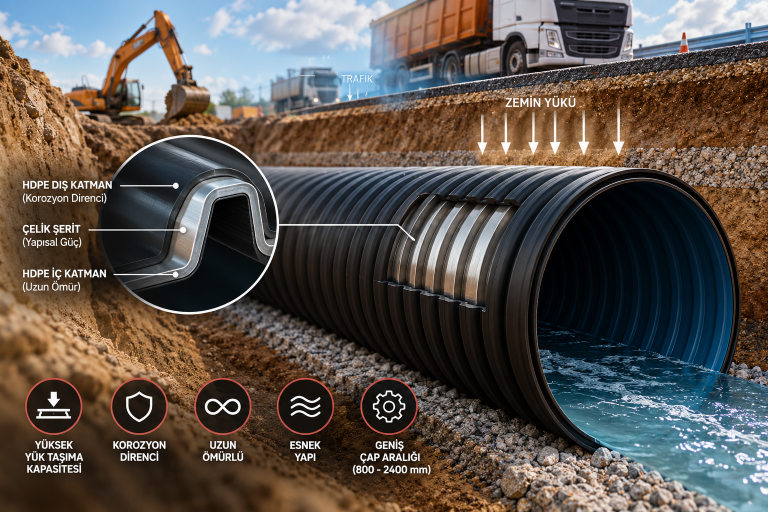
Infrastructure Projects: In municipal drinking water networks, high-pressure resistant HDPE pipes, electrofusion couplings, and tees are utilized to form a monolithic, leakproof underground network.
Industrial Plants: In process lines transferring chemical fluids, polymeric flange connections with high chemical resistance are preferred for transitions to valves.
Indoor Plumbing: In narrow shafts and between floors, gasketed push-fit systems and mechanical unions that provide installation speed are the connection types most frequently used by technicians.
Frequently Asked Questions
- Can gasketed connection systems substitute for welded (coupling) connections in high-pressure lines?
No. Although gasketed systems provide flexibility in gravity-fed (gravity) lines, they create a sealing risk in high-pressure drinking water networks. In pressurized lines, electrofusion or butt fusion (coupling) methods that render the pipe a single piece (monolithic) are mandatory.
- What is the engineering advantage of using flanges and unions in system revisions?
Flanges and unions are dismountable connections that allow localized interventions (valve/pump replacement) without the need to cut the line. In this way, they minimize the operational downtime and cost of the plant during periodic maintenance or malfunction scenarios.
- How does the use of elbows affect fluid dynamics, and how are risks prevented?
Sudden changes of direction in elbows cause turbulence and the risk of water hammer in the system. To reduce this hydraulic shock, using two 45° elbows instead of a single 90° elbow and fixing these turning points with concrete thrust blocks is the most effective solution.