Ce este o supapă de sens invers și cum funcționează?
A check valve is a mechanical control valve that allows fluid or gaseous media to advance in only one direction while automatically preventing flow in the reverse direction. The most significant feature that distinguishes check valves from other valve types is that they do not require any operator or external energy source to function.
Opening via the line fluid's own pressure, check valves close automatically due to spring pressure, disc weight, or gravity when the flow stops or reverses. This ensures a safe and continuous unidirectional flow within the system.
What is a Check Valve and How Does It Work?
The core mechanism of check valves consists of a hinged disc or closure element that can move freely in one direction. The operation of the system is based on the following principles:
Cracking Pressure: A specific minimum pressure differential must form between the inlet and outlet for the valve to open. This value varies depending on the valve type, diameter, and custom design.
Flow Initiation: When the fluid provides the designated minimum pressure (cracking pressure), the disc opens and permits passage.
Automatic Closure: When the flow is interrupted or a reverse pressure occurs, the mechanism engages automatically. The disc closes, completely blocking backflow.
Advantages of Using Check Valves
The primary reasons for choosing check valves in system designs are as follows:
Unidirectional Flow Assurance: By preventing backflow, it protects pumps, valves, and sensitive measuring equipment from damage.
Energy-Free Automatic Operation: It does not require an external electric or pneumatic source; it operates entirely under the fluid's own pressure.
High Efficiency: When the correct type and diameter are selected, it creates minimum pressure loss in the system, maintaining flow efficiency.
Quiet and Stable Performance: Especially spring-loaded and silent type models reduce vibration and impact effects (water hammer) in the plumbing.
Wide Product Range: Horizontal or vertical installation options, different pressure classes, and diameter values adapt to all types of piping layouts.
Most Preferred Check Valve Types
Different check valve designs are available depending on the application area and requirements:
Swing Check Valve: Generally preferred in horizontal lines. It is ideal for clean water applications and low-pressure systems.
Silent Check Valve (Spring-Loaded): Can be mounted in any direction (horizontal/vertical). It stands out for its quiet operation in heating, cooling, and general plumbing applications.
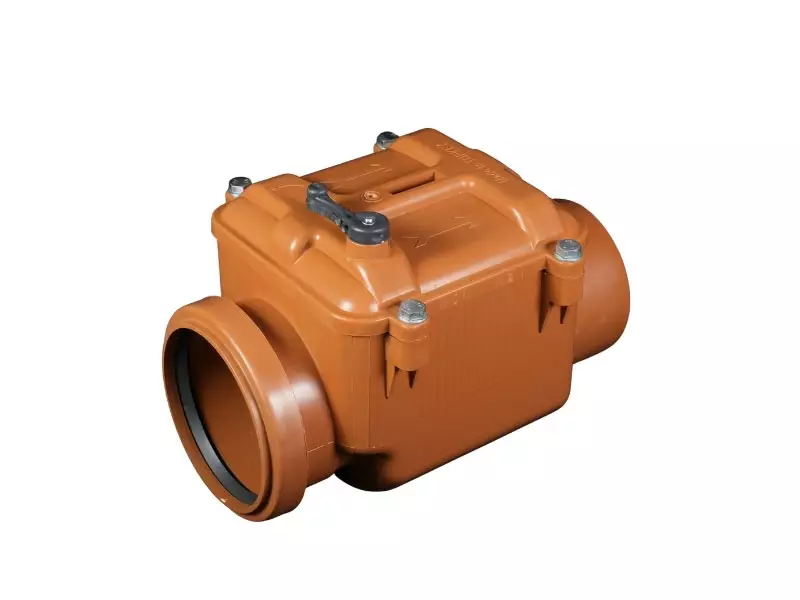
Ball Check Valve: Used in wastewater and septic lines. Thanks to its internal ball mechanism, it is highly resistant to solid particles.
Dual Plate Check Valve: Due to its compact structure, it provides space savings and low pressure loss in large-diameter industrial lines.
Check Valve Application Areas
Check valves are encountered in many sectors where flow control is critical:
Plumbing Installations: Potable water, hot-cold water lines, and septic systems.
HVAC Systems: Heating, cooling (central heating, radiator, air conditioning) systems.
Industrial Lines: Liquid/gas flows in the chemical, petrochemical, and food industries.
Safety Systems: Maintaining system pressure in fire extinguishing lines.
Ventilation: Preventing unwanted air return in air exhaust systems.
Installation and Maintenance Tips
To ensure a long lifespan for the device, the following points must be considered during installation:
Direction Identification: The flow direction arrow on the valve must be checked.
Sealing: Leaks must be prevented using appropriate materials such as Teflon tape or hemp lint.
Pressure Control: System pressure must be fully relieved prior to installation.
Periodic Maintenance: Regular inspections enhance system safety and extend the valve's service life.